
 EN
EN
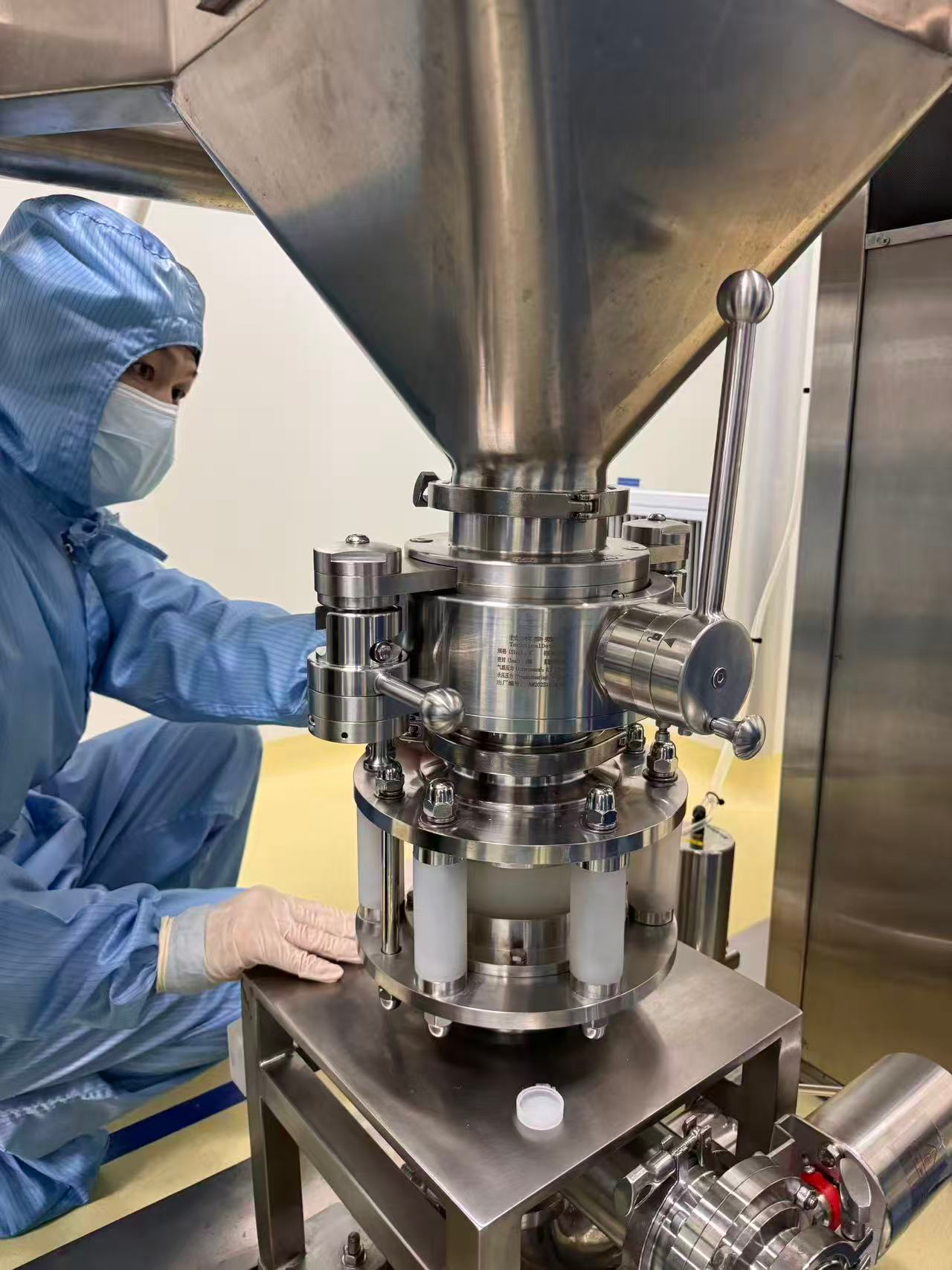
How the Split Butterfly Valve Enables Zero-Exposure Powder Transfer
Dual-Unit Docking Architecture: Active and Passive Halves for OEB5-Compliant Isolation
The split butterfly valve (SBV) achieves Occupational Exposure Band 5 (OEB5) containment through its patented dual-unit design. An active half permanently affixes to stationary equipment—such as reactors or isolators—while a passive half mounts to mobile containers like Intermediate Bulk Containers (IBCs). During docking, interlocking discs rotate 90° to align and form a continuous, sealed flow path. This mechanism maintains full containment integrity throughout transfer cycles, eliminating operator exposure to high-potency active pharmaceutical ingredients (HPAPIs). Independent testing confirms sustained airborne concentrations below 1 µg/m³—exceeding OEB5 thresholds and validating zero-exposure capability in real-world handling.
Real-World Validation: SBV Integration in HPAPI Isolator-to-Bin Transfer Systems
In practice, SBVs deliver consistent zero-exposure performance when integrated between isolators and discharge bins. Their helical gasket and pressure-assisted sealing system prevent particle escape—even during micron-scale powder transfers—by dynamically compensating for surface irregularities and thermal shifts. A 2023 industry study documented 99.98% containment efficiency across 500+ transfer cycles in OEB5-compliant facilities, with no detectable cross-contamination. This reliability aligns with FDA guidance on closed-system processing, eliminates cleaning downtime between batches, and reduces containment failure risk by 74% compared to legacy valves.
Containment Performance of the Split Butterfly Valve: Meeting <0.1 µg/m³ STTWA
Pressure-Assisted Sealing and Helical Gasket Design for Dust-Tight, Liquid-Tight Closure
Split butterfly valves achieve industry-leading containment—consistently measuring below 0.1 µg/m³ in Standardized Threshold Toxicity Weighted Average (STTWA) tests—through two synergistic engineering features: pressure-assisted sealing and a helical gasket design. Compressed air actively forces dual polymer seals into precise alignment during closure, eliminating microscopic gaps where particles could migrate. This adaptive compression maintains integrity even with abrasive or cohesive powders.
The helical gasket features interlocking stainless-steel coils wrapped in chemically resistant elastomers. Unlike flat gaskets, its spiral geometry provides:
- Redundant, multi-path sealing that traps particles before they escape
- Resistance to deformation under thermal cycling or pressure shocks
- Self-cleaning action during actuation, minimizing residue buildup and cross-contamination
Validated per ISO 14644-1 cleanroom standards, this dual-sealing architecture ensures zero measurable leakage for both dry particulates and viscous slurries. In OEB5 applications, it reduces cleaning validation costs by 40% while upholding the highest level of personnel protection.
Regulatory and GMP Compliance for Split Butterfly Valves in Pharma Manufacturing
Pharmaceutical manufacturers handling potent compounds must ensure split butterfly valves meet stringent regulatory and Good Manufacturing Practice (GMP) requirements. As critical containment barriers in HPAPI transfer systems, SBVs must demonstrate material traceability, surface finish validation, and verified cleaning efficacy—all essential for audit readiness and patient safety.
Aligning SBV Design with FDA Guidance, ISPE SMEPAC, ATEX, and OEL Band Requirements
SBV designs address four core regulatory dimensions:
- FDA 21 CFR Part 211: Requires full material traceability, compatibility with process media and cleaning agents, and electropolished surfaces ≤ 0.8 μm Ra to inhibit particulate retention.
- ISPE SMEPAC: Validates containment against OEB4/5 thresholds (<1 µg/m³); SBVs meet this via 360° pressure-assisted gasket compression and real-time seal adaptation.
- ATEX Directive 2014/34/EU: Mandates spark-resistant 316L stainless steel construction and IP66-rated actuators for explosive dust environments.
- OEL Band Alignment: Sealing systems must exceed compound-specific occupational exposure limits (OELs) by at least a 10× safety margin—verified through Standardized Threshold Toxicity Weighted Air monitoring during performance qualification.
Material and Surface Integrity: Stainless Steel SBVs for High-Risk API and Toxic Powder Handling
Material and surface integrity are foundational to SBV performance in high-risk API and toxic powder applications. Grade 316L stainless steel is the industry standard due to its corrosion resistance against aggressive cleaning agents (e.g., CIP/SIP solutions) and potent APIs—preventing particulate shedding, ion leaching, or micro-fracture formation under repeated pressure cycles. Electropolished surfaces with Ra ≤ 0.4 µm further minimize powder adhesion and support complete decontamination, which is critical for compounds with OELs below 1 µg/m³. Full compliance with FDA 21 CFR Part 211, EMA GMP Annex 1, and ASME BPE standards ensures traceable, auditable material certifications—and confirms fitness for use in the most demanding potent compound transfers.
FAQ
What is a split butterfly valve?
A split butterfly valve (SBV) is a sophisticated valve system designed for zero-exposure powder transfer, particularly in pharmaceutical and chemical processing. It consists of an active half and a passive half, which ensure containment integrity during transfer cycles by forming a continuous and sealed flow path.
How does the SBV meet OEB5 containment standards?
The SBV meets Occupational Exposure Band 5 (OEB5) containment standards through its dual-unit design, helical gasket, and pressure-assisted sealing system. These features prevent particle escape and maintain airborne concentrations below 1 µg/m³, ensuring safe handling of high-potency active pharmaceutical ingredients (HPAPIs).
How do split butterfly valves maintain a dust-tight and liquid-tight seal?
Split butterfly valves maintain a dust-tight and liquid-tight seal through a combination of pressure-assisted sealing and a helical gasket design. Compressed air aligns dual polymer seals during closure, while the helical gasket traps particles and compensates for thermal cycling or pressure shocks.
What regulatory requirements do SBVs meet?
SBVs align with key regulatory requirements such as FDA 21 CFR Part 211, ISPE SMEPAC, ATEX Directive, and OEL Band alignment, ensuring full containment, material traceability, and suitability for explosive dust environments.
Why is stainless steel used in SBVs?
Grade 316L stainless steel is used in SBVs for its high corrosion resistance, compatibility with cleaning agents, and ability to prevent particulate shedding. Its electropolished surfaces further minimize powder adhesion, making it ideal for high-risk API and toxic powder handling.
Table of Contents
- How the Split Butterfly Valve Enables Zero-Exposure Powder Transfer
- Containment Performance of the Split Butterfly Valve: Meeting <0.1 µg/m³ STTWA
- Regulatory and GMP Compliance for Split Butterfly Valves in Pharma Manufacturing
- Material and Surface Integrity: Stainless Steel SBVs for High-Risk API and Toxic Powder Handling
- FAQ