
 EN
EN
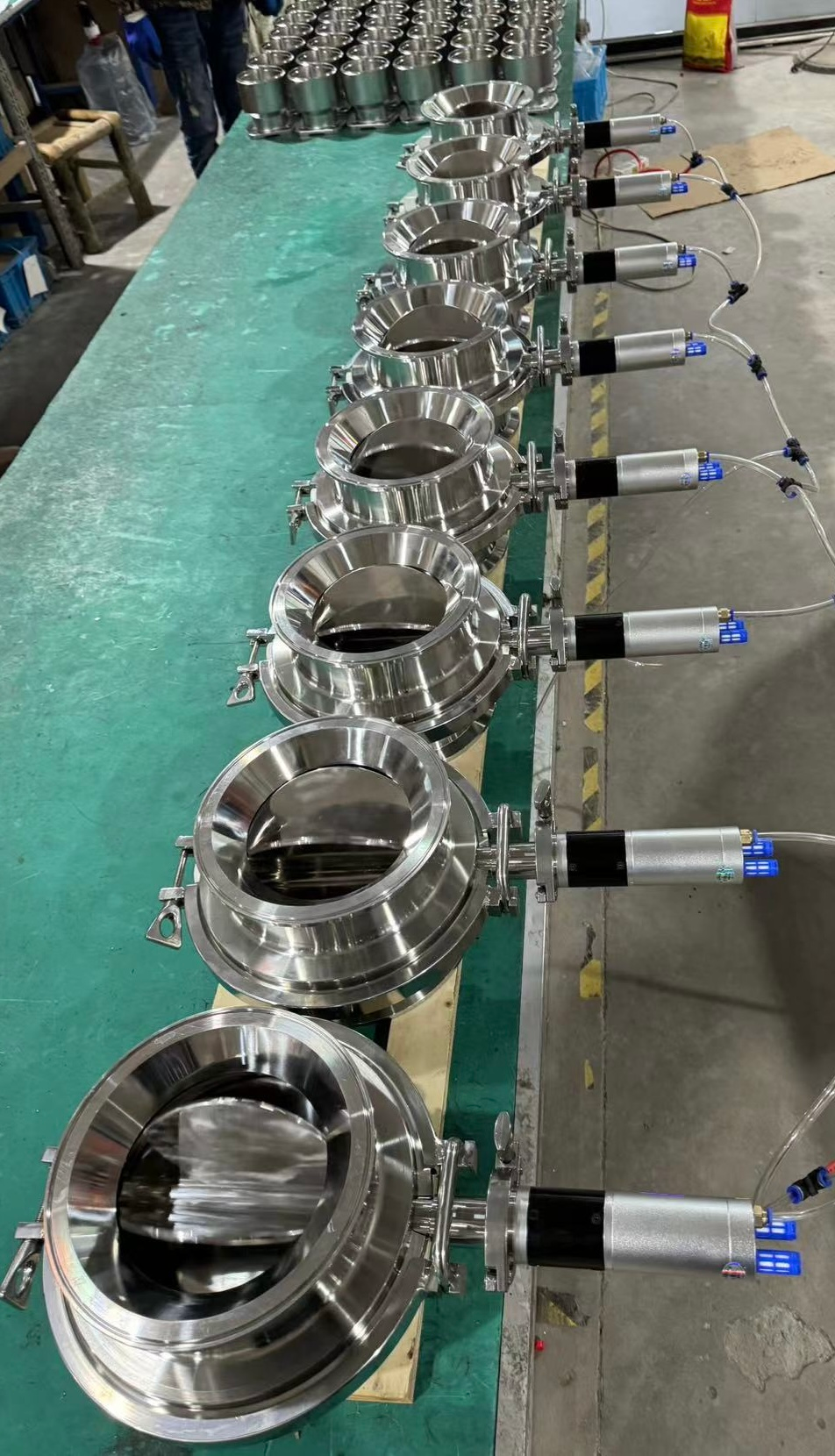
Core Rotary Valve Functions: Airlocking, Metering, and Pressure Isolation
How rotary valves act as precision airlocks to maintain pressure differentials up to 1.5 bar
Rotary valves serve as critical airlocks in pneumatic conveying systems, sealing pressure differentials up to 1.5 bar between process zones. Their rotating rotor pockets form sequential, transient chambers that isolate atmospheric conditions from pressurized or vacuum lines—enabling continuous material transfer without compromising system integrity. This airlock function is essential for dust containment, energy efficiency, and maintaining vacuum integrity in applications such as cement silo filling or pharmaceutical batch transfers. Slow rotor speeds (under 20 RPM) optimize sealing by minimizing turbulence, while properly specified units limit air leakage to less than 0.5% of total system airflow.
Metering control for consistent powder and granule discharge rates under varying fill ratios
Rotary valves provide reliable volumetric metering by directly linking rotor speed to discharge volume. Operators can maintain flow consistency within ±2% despite fluctuating hopper levels by adjusting RPM. Eight-vane rotors offer smoother material transition and reduced pulsation compared to six-vane configurations—particularly beneficial for flour or polymer pellet handling. For hygroscopic materials with moisture content exceeding 20%, staggered pocket geometries help prevent bridging and ensure uniform feed into mixers or packaging lines without degradation.
Operating Principles Impacting Rotary Valve Performance
Rotor–housing clearance, tip speed, and pocket geometry effects on leakage and material integrity
Rotor–housing clearance is a key determinant of both sealing performance and material integrity: optimal gaps of 0.05–0.15 mm minimize air leakage while avoiding compression-induced particle damage. Clearances above 0.2 mm can cause up to 15% pressure loss in pneumatic systems. Tip speed must be balanced—velocities below 0.5 m/s protect fragile granules, whereas higher speeds accelerate abrasive wear on housing surfaces. Pocket geometry influences emptying efficiency and carryover risk: deep pockets increase capacity but may retain material; tapered designs improve discharge for cohesive powders; and closed-end pockets reduce particle attrition by 30% versus open configurations when handling crystalline materials.
Vaned vs. vaneless rotors: trade-offs for fine powders versus abrasive granules
Vaned rotors deliver high-precision metering for free-flowing powders but risk fluidizing particles under 50 microns—increasing leakage potential. Their exposed blades also suffer three times faster wear with abrasive granules like silica sand. In contrast, vaneless rotors eliminate blade erosion through solid-pocket construction, reducing maintenance frequency by 40% in mineral processing. However, they sacrifice ~20% volumetric efficiency with lightweight materials. For hygroscopic powders (>15% moisture), specialized rotor coatings—regardless of configuration—effectively prevent buildup and maintain consistent operation.
Material-Driven Rotary Valve Selection Criteria
Particle size distribution, moisture content (>20% reduces service life by 42%), and abrasiveness as key selection drivers
Selecting the right rotary valve requires rigorous assessment of material properties. Particle size distribution governs sealing reliability: ultrafine powders (<50 µm) exploit rotor–housing clearances to increase leakage, while oversized granules (>10 mm) raise jamming risks. Moisture content above 20% accelerates corrosion and promotes adhesion, cutting service life by 42%—a finding validated across bulk handling studies. Abrasiveness, measured by Mohs hardness, dictates material compatibility: substances scoring above 3.5 require hardened steel housings or ceramic-coated rotors to resist premature wear. Together, these factors determine valve longevity, pressure isolation fidelity, and overall system uptime—making them non-negotiable inputs in specification decisions.
Critical Industrial Applications of Rotary Valves in Bulk Solids Handling
Rotary valves are indispensable across industries reliant on controlled dry bulk solids handling. In cement production, they enable precise transfer between silos, conveyors, and pneumatic lines while sustaining pressure isolation up to 1.5 bar. Food processing facilities depend on their sanitary, repeatable metering for ingredient dosing in mixers and packaging systems. Chemical manufacturers use explosion-isolated variants to safely handle reactive or hazardous granules. In plastics recycling, rotary valves ensure consistent flake feeding into extruders without air intrusion. Agricultural operations rely on them for calibrated grain discharge from storage to processing equipment. They also play a vital role in dust collection systems—maintaining pressure stability during filtration cycles. Across all these applications, rotary valves support operational efficiency, product quality, and process continuity by enabling dependable, leak-resistant material flow between stages.
FAQ
Q: What is the main function of a rotary valve in pneumatic systems?
A: The main function of a rotary valve in pneumatic systems is to act as an airlock, maintaining pressure differentials (up to 1.5 bar) while enabling continuous material transfer between process zones without compromising system integrity.
Q: How does rotor speed impact the performance of rotary valves?
A: Rotor speed directly affects the discharge volume and flow consistency. Adjusting the RPM allows for maintaining accurate volumetric metering, even under varying fill ratios.
Q: What are the benefits of using eight-vane rotors over six-vane configurations?
A: Eight-vane rotors provide smoother material transitions and reduced pulsation, making them particularly effective for handling flour or polymer pellets.
Q: How does material moisture content influence rotary valve selection?
A: Materials with moisture content above 20% can accelerate corrosion and promote adhesion, reducing the valve's service life by approximately 42%.
Q: What are some common industrial applications of rotary valves?
A: Rotary valves are commonly used in cement production, food processing, chemical manufacturing, plastics recycling, and agricultural industries for precise material handling and pressure isolation.