
 EN
EN
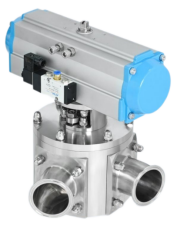
How Ball Segment Valves Enable Precision Flow Control in Critical Processes
V-Port Geometry and Throttling Accuracy for ±0.5% Flow Consistency
Ball segment valves offer precise flow control thanks to their specially designed V-port shape, which creates consistent flow patterns when adjusting between open and closed positions. Traditional round ports tend to cause messy, unpredictable flow patterns, but the V-notch allows for smooth, controlled adjustments without wasting much energy. These valves pass the rigorous ISA-75 tests for control performance, maintaining flow accuracy within about half a percent consistently. That level of precision matters a lot in pharmaceutical cleaning systems where getting the right amount of chemicals is essential for both making good products and staying compliant with regulations. The specially shaped edges on these valves also handle thick or stringy materials better than standard designs, cutting through them while keeping the seals intact so nothing builds up inside the system over time. This helps maintain accuracy even when dealing with challenging slurries that would gum up other types of valves.
Why Ball Segment Valves Outperform Standard Ball Valves in Modulating Service
Conventional ball valves sacrifice precision in partial-open positions due to abrupt flow transitions and elevated cavitation risk. Ball segment valves overcome these limitations through three integrated advantages:
| Control Characteristic | Ball Segment Valves | Standard Ball Valves |
|---|---|---|
| Flow Linearity | V-port enables proportional control across full range | Poor linearity between 15–85% open |
| Rangeability | Up to 100:1 turndown ratio | Typically < 20:1 |
| Cavitation Resistance | Staged pressure reduction minimizes vapor collapse | High risk at intermediate openings |
| Seal Wear | Uniform contact pressure extends seat life | Concentrated loading accelerates wear |
With only about 50 degrees of rotation, these segments actually improve how well actuators work while also cutting down on seal friction. This setup allows for pretty stable control within plus or minus 2 percent when dealing with steam and gas in energy systems, something really important since nobody wants thermal stress issues messing things up. When it comes to tough environments such as those found in mining operations with all sorts of gritty slurries running through them, the hardened V-port edges make a big difference. Independent tests show they maintain their accuracy roughly three times longer compared to regular ball valves. Makes sense why so many industries rely on this technology despite the initial cost considerations.
Robust Handling of Abrasive and Cohesive Media with Ball Segment Valves
Seal and Seat Design Resilience Against Slurries, Pastes, and Fine Powders
Conventional valves tend to wear out fast when dealing with abrasive slurries, sticky pastes, or fine powders because these materials either hit the valve components or build up over time. Ball segment valves tackle this problem differently thanks to their special polymer-metal composite seats and unique segmented seal designs built to last longer. The hardened parts on these valves stop particles from getting embedded, and the special rubber materials stay flexible even at extremely cold temperatures like -40 degrees Celsius. What makes them really effective is the angled contact surface that actually cuts through buildup with every operation cycle, which helps keep things running smoothly in mineral slurry transport systems and other applications where solids make up most of what's flowing through. Tests have shown these valves last almost 90% longer than regular ones when working with cement mixtures, cutting down on those frustrating unexpected shutdowns caused by failed seals from all the tiny particles getting stuck.
High-Torque Actuation Without Seal Compromise: Engineering the Dry Bulk Advantage
When dealing with dry bulk materials such as flour or silica, these substances require significant torque to break apart without damaging the seals. Ball segment valves address this challenge through their unique design featuring an eccentrically placed shaft along with encapsulated bearings. By shifting the rotation axis off center, these valves actually reduce the amount of force needed for operation by around 35 percent, all while keeping consistent pressure against the sealing surfaces. The reinforced stem seals do a great job at preventing any material from getting inside, even when faced with intense back pressures reaching up to 2,500 psi or 172 bar. Thermal conditions can be pretty extreme too, ranging from minus 200 degrees Celsius down to as hot as 500 degrees Celsius. Spring loaded seat retainers handle this temperature range well by adjusting automatically to different expansion rates between parts. This prevents those annoying gaps where leakage might occur during plastic pellet transport. Real world testing shows that these valves maintain their performance level throughout over 50 thousand cycles of heavy usage without showing signs of wear.
Sector-Specific Ball Segment Valve Deployments and Compliance Requirements
Pharmaceutical & Chemical: CIP/SIP Compatibility and Sterile Isolation in Batch Systems
Ball segment valves are essential for maintaining sterile conditions in pharmaceutical batch processing plants. When cross contamination happens, companies often face costs around half a million dollars per incident according to PDA research from last year. These valves have smooth metal surfaces combined with inflatable seals that get rid of those pesky dead leg areas where contaminants might hide. This design makes it possible to properly validate both Clean-in-Place and Sterilize-in-Place procedures as required by FDA regulations under 21 CFR Part 211. The result? Flow paths free from particles and temperature consistency within plus or minus 0.5 degrees Celsius during steam sterilization cycles. From a compliance standpoint, manufacturers look for several key features including materials certified under USP Class VI standards and meeting FDA requirements. Automated integrity checks help ensure aseptic conditions remain intact throughout production runs. Surface finishes need to be smoother than 15 Ra microns to prevent biofilms from forming on contact surfaces. And finally, the rubber components must withstand harsh cleaning agents like hydrogen peroxide vapor without degrading over time.
Food, Beverage, and Wastewater: Sanitary Integrity and Solids Tolerance in Real-World Installations
Ball segment valves play a crucial role across food processing, beverage production, and wastewater management by preventing product recalls through their ability to handle media loaded with solids like fruit pulps containing as much as 40% solids content and challenging materials such as sewage sludge, all while conforming to strict 3-A Sanitary Standards. The unique segmented ball mechanism cuts through fibrous substances without getting stuck, maintaining impressive seal integrity at around 99.98% even when dealing with particle suspensions measuring up to 5 mm in size according to WEF research from 2023. For installations where sanitation matters most, these valves incorporate full discharge cavities that help eliminate places where bacteria might hide. They also feature flow paths optimized for cleaning processes that maintain flushing speeds above 2.5 meters per second. Made from electro polished 316L stainless steel meeting both NSF and 3-A standards, they come with wear resistant seating surfaces tested successfully for over 50 thousand cycles in environments filled with silica particles.
FAQ
What are ball segment valves used for? Ball segment valves are used for precision flow control in various critical processes such as pharmaceutical cleaning, energy systems, and food processing. They are particularly effective in handling abrasive, cohesive, and dry bulk materials.
How do ball segment valves differ from standard ball valves? Ball segment valves offer better flow linearity, higher rangeability, improved cavitation resistance, and extended seal wear life compared to standard ball valves. Their V-port design enables smoother and more precise flow control.
What industries benefit most from ball segment valves? Industries such as pharmaceuticals, chemicals, mining, food and beverage, and wastewater management greatly benefit from ball segment valves due to their precision, durability, and compliance with sanitary standards.