
 EN
EN
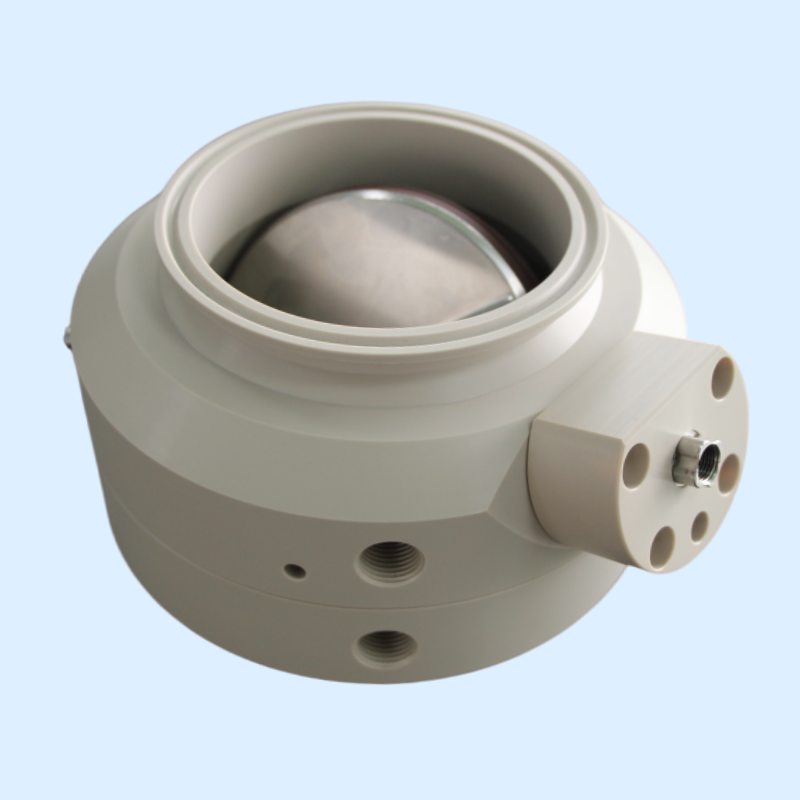
Why a Split Butterfly Valve Is Essential for Aseptic Powder Transfer
Eliminating Contamination Risks in Dry Powder Handling
Sterile powder transfer requires complete cleanliness because even tiny particles can ruin whole batches of product. Split butterfly valves tackle this challenge with their unique two-part clamping system that forms a tight radial seal against both powder escape and germ entry. Traditional valves often have hidden corners where particles get stuck, but these modern valves have smooth interiors without those dead spots, making them ideal for tricky materials like hygroscopic powders that tend to form lumps. The valves are made from electropolished 316L stainless steel with surface roughness below 0.38 microns, which makes it hard for bacteria to stick around. Plus, the rubber parts meet both FDA and EU standards, so they won't react chemically or break down during repeated steam cleaning cycles. When tested with powerful active pharmaceutical ingredients, these systems consistently show better than 99.98% reduction in biological contamination and stay within strict ISO 14644-1 Class 5 standards for airborne particles (no more than 3,520 particles per cubic meter at 0.5 microns or larger). This level of performance means manufacturers can be confident about keeping different products separated and avoiding costly cross-contamination issues.
Dead-Leg-Free Architecture and Full CIP/SIP Validation Capability
Standard valves tend to form dead spots where leftover powder builds up when operations pause, which creates perfect breeding grounds for microbes. Split butterfly valves solve this issue thanks to their flush mounted internal components and unbroken flow path that gets rid of those stagnant areas completely. What makes them stand out is their two piece design that lets everything separate fully without taking apart any parts, so automated cleaning processes can access every surface area thoroughly. When it comes to sterilization, these valves hold up well under intense conditions too. They pass SIP tests at temperatures around 140 degrees Celsius for over half an hour straight, meeting strict sterility standards down to one millionth level. The actual validation process covers several key aspects including:
- Swab tests showing ≤ 1 CFU/cm² post-cleaning
- Pressure decay testing verifying seal integrity across vacuum (−1 bar) and pressure (6 bar) conditions
- Real-time particulate monitoring aligned with ISO 14644-1 Class 5
This architecture cuts changeover time by 70% versus diaphragm valves and removes manual cleaning variability—supporting full compliance with FDA 21 CFR Part 211 and EU GMP Annex 1 through digitally auditable cycle reports.
Engineering the Split Butterfly Valve for Sterility Assurance
Two-Halves Clamping Mechanism and Radial Sealing Under Vacuum and Pressure
What makes this valve stand out is how it clamps using two identical halves. The system applies even pressure throughout the seal area without messing with the rubber parts, so the seals stay intact after many cleaning and sterilization cycles. The radial seal works well whether there's negative pressure at minus 1 bar or positive pressure going up to 6 bars. This means no particles can get in when switching between different products on the production line. Tests have found that this particular design cuts down contamination chances by almost all (around 99.7%) when handling powerful APIs, which solves one of the main problems factories face when running multiple products through the same equipment.
Material Compliance: Electropolished 316L SS, PTFE-Coated Discs, and FDA-Approved Elastomers
Choosing the right materials plays a key role in ensuring sterility throughout manufacturing processes. For valve bodies, we typically go with electropolished 316L stainless steel that meets those strict ASME BPE standards for surface finish around 0.38 microns or better. The discs come with two layers of PTFE coating which makes them much less likely to stick to fine powders under 50 microns in size compared to regular uncoated surfaces. We've seen reductions of about 80% in powder adhesion when using these coated discs. All our rubber parts carry proper certifications from both FDA regulations (21 CFR 177.2600) and EU Regulation 10/2011 for products that actually touch what's being manufactured. Important elements also include fluorocarbon seals that can handle over 50 steam-in-place cycles at temperatures reaching 140 degrees Celsius. Every batch comes with complete material tracking backed by mill test certificates, plus we conduct thorough extractables testing according to USP chapter 665 guidelines to ensure nothing unwanted leaches out during production.
Regulatory Validation and Operational Proof of Performance
Meeting FDA, EU GMP Annex 1, and ISO 14644-1 Standards for Aseptic Processing
Split butterfly valves meet important regulatory standards right from their basic design rather than needing modifications later on. The absence of dead legs in these valves means they naturally comply with EU GMP Annex 1 guidelines regarding sterile containment as well as the FDA's 21 CFR Part 211 rules about controlling contamination risks. Testing for particles shows these valves work within ISO 14644-1 Class 5 cleanroom standards. Plus, the surfaces have been electropolished and come with proven CIP/SIP cleaning protocols that maintain sterility throughout daily operations. Independent tests have shown absolutely no integrity issues after over 500 usage cycles. Every component comes with complete material records so manufacturers can pass audits easily without missing any required documentation.
Real-World Validation: High-Potency API Transfer in Class C Isolators (99.98% Bioburden Reduction)
In a recent GMP compliant validation test inside Class C isolators, researchers observed nearly complete bioburden reduction at around 99.98% when transferring high potency APIs continuously. The experiment ran for three full days subjecting equipment to repeated vacuum and pressure changes within a range of plus or minus half a bar. They focused special attention on valve pipe connections since those spots tend to be problem areas. Swab samples taken there revealed no detectable endotoxins below 0.001 EU per milliliter, which is pretty impressive considering the conditions. Most importantly, the seals held firm throughout almost all the downtime periods too. What really stands out though is how well the valves performed with moisture sensitive materials even when humidity was kept extremely low at just 15%. This kind of performance matters a lot in situations where getting contamination right isn't just about money but actually affects patient safety directly.
Split Butterfly Valve vs. Alternatives in Powder Transfer Applications
When dealing with aseptic dry powder processing, gate and ball valves just don't cut it. Gate valves create those pesky dead legs where residue gets trapped, making them breeding grounds for microbes during equipment changes. Ball valves are no better really since they need complete take apart for proper cleaning, which eats into valuable production time and raises the chances of mistakes happening. Both types have serious issues with fine powders that stick together, resulting in messy buildups, leaks, and worst of all, cross contamination between batches. Enter the split butterfly valve though. With its unique two part clamping system, operators can quickly access every surface that comes into contact with materials without needing tools or dismantling anything at all. This means genuine full CIP capabilities right out of the box. The radial seal design holds up under both vacuum conditions and pressure fluctuations, plus the whole thing takes up far less room compared to other options, something that matters a lot inside tight spaces like isolators and glove boxes. Sure, ball valves work well for liquids under high pressure and gate valves might be okay for occasional shut offs, but nobody beats the split butterfly when it comes to hygiene standards, how fast validation happens (about 40 percent quicker than standard models), or actual results in moving high purity, high potency powders around safely.
FAQ Section
What is a Split Butterfly Valve?
A split butterfly valve is a specialized type of valve used for aseptic powder transfer. It features a unique two-part clamping system that prevents contamination by forming a tight radial seal against powder escape and germ entry.
Why is the Split Butterfly Valve preferred over other valve types?
Split butterfly valves provide significant advantages over gate and ball valves by eliminating dead spots where residue may accumulate, thus minimizing contamination risks. They also offer easier access for cleaning, full CIP/SIP capabilities, and maintain performance under both vacuum and pressure conditions.
Are Split Butterfly Valves compliant with regulatory standards?
Yes, split butterfly valves meet important regulatory standards, including FDA and EU GMP Annex 1. They comply with ISO 14644-1 Class 5 cleanroom standards and have been validated for aseptic processing.
How do Split Butterfly Valves maintain sterility?
These valves maintain sterility through a dead-leg-free architecture and the use of electropolished materials and coatings. They undergo thorough testing for cleanliness and integrity, ensuring compliance with established sterility protocols.