 EN
EN
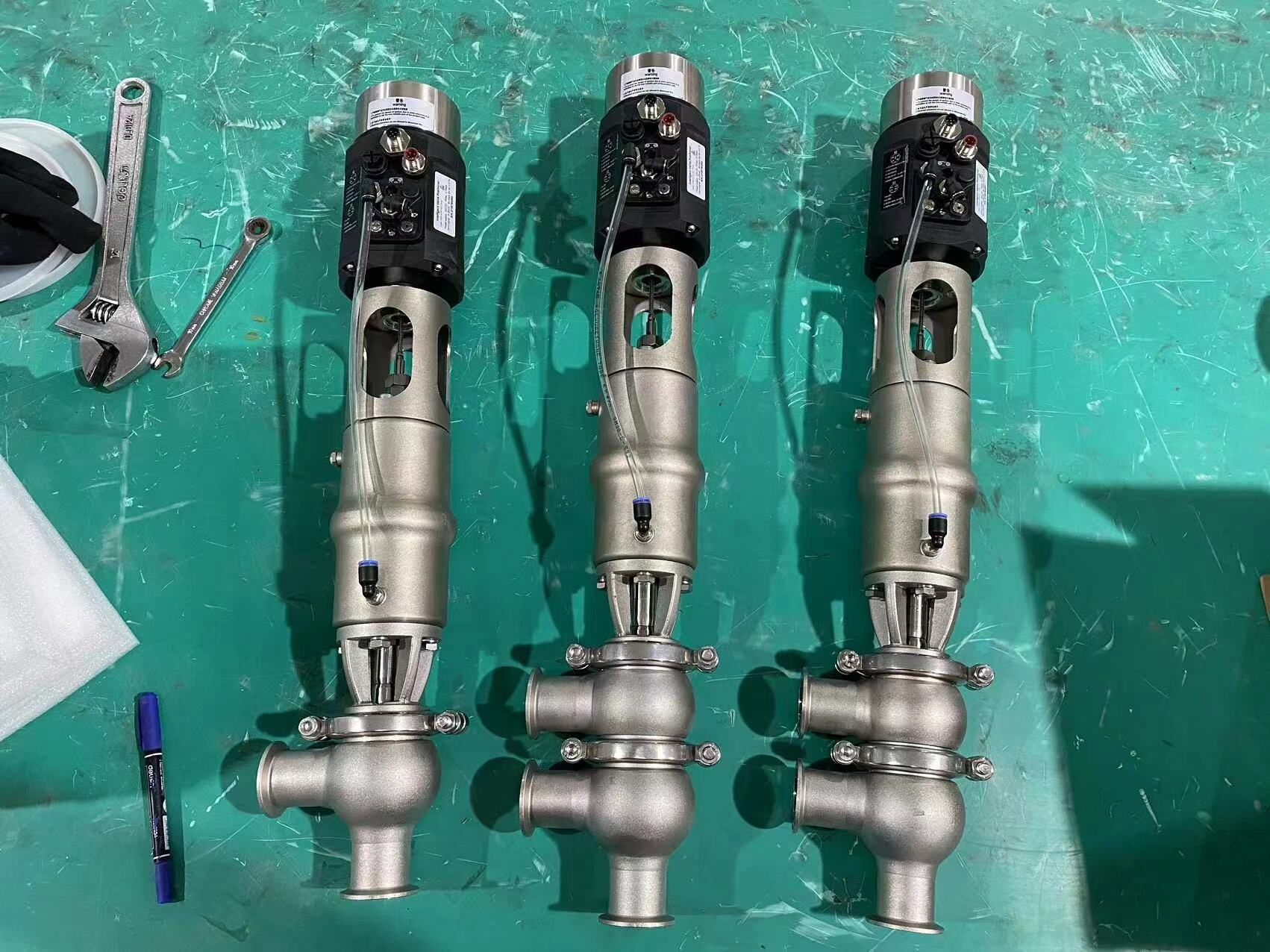
Fundamental Role of Pneumatic Control Valves in Automation Systems
How pneumatic control valves enable precise actuation in industrial processes
Pneumatic control valves take compressed air signals and turn them into mechanical movement with pretty much pinpoint accuracy, which is why they're so important in manufacturing where exact measurements matter. When there's a drop in pressure, these valves automatically shut down right away something that keeps operations safe in places like drug manufacturing plants or car factories. The newer versions can complete their full range of motion in less than half a second, allowing machines to switch tools quickly during CNC processes while still keeping everything aligned just right.
Core working principle: Regulating airflow for reliable motion control
These valves operate through a balanced interaction between diaphragm actuators and spool mechanisms. Air pressure differentials (typically 3—15 PSI) position internal components to meter airflow with €2% deviation, ensuring consistent force output in pressing operations and repeatable sequencing in packaging machinery—even under variable loads.
Growing adoption in smart factories and Industry 4.0 environments
Factories that have switched to these new IoT compatible pneumatic control valves are seeing around 18% improvements in their production cycles. The energy savings are pretty impressive too - some bottling operations have cut their compressed air usage down by nearly a quarter thanks to these valves' ability to adjust airflow as needed. What makes these valves stand out is how they work with existing factory systems. They connect easily through standard industrial protocols like OPC UA, which means plant managers can get live updates right into their monitoring systems. This connection isn't just for show either. It actually helps manufacturers scale up their smart factory capabilities over time without major overhauls or compatibility issues.
Integration with IoT sensors for real-time performance monitoring
When paired with vibration sensors, pneumatic valves detect early signs of diaphragm wear 30% sooner than manual inspections. Wireless pressure transmitters enable closed-loop adjustments during high-speed labeling, maintaining ±0.5 PSI stability. Cloud-based analytics platforms process this data to predict maintenance needs with 94% accuracy, significantly reducing unplanned downtime.
Key Types and Functions of Pneumatic Directional Control Valves
Pneumatic directional control valves form the backbone of compressed-air systems in industrial automation, directing airflow with surgical precision. They allow operators to regulate actuator speed, force, and sequencing through accurate flow control.
Understanding 3/2, 5/2, and 5/3 Valve Configurations and Their Applications
Valve configurations are defined by port count (first number) and positions (second number):
| Valve Type | Ports | Positions | Common Use Case | Efficiency Rating* |
|---|---|---|---|---|
| 3/2 | 3 | 2 | Single-acting cylinder control | 88% |
| 5/2 | 5 | 2 | Double-acting cylinder operation | 92% |
| 5/3 | 5 | 3 | Mid-position holding systems | 85% |
(2024 Industrial Valve Efficiency Report)
The 3/2 valve’s simplicity makes it ideal for clamping tools requiring single-action release, while 5/2 valves dominate press machines needing bidirectional cylinder movement. 5/3 configurations are essential in safety-critical applications where equipment must hold position during emergency stops, accounting for 30% of industrial installations (Pneumatic Systems Journal, 2023).
Differences Between Direct-Acting Solenoid Valves and Pilot-Operated Designs
Direct-acting solenoid valves use electromagnetic force to shift the spool, delivering response times under 15 ms—ideal for high-speed packaging lines. In contrast, pilot-operated valves leverage system air pressure to move larger spools, handling flow rates up to 1,500 l/min with 60% less energy consumption than direct-acting models (2023 Flow Dynamics Study).
Function in Single-Acting vs. Double-Acting Pneumatic Cylinders
Most single acting cylinders work with either 3/2 or 4/2 valves in those budget friendly spring return systems we see all over material handling chutes. When it comes to double acting cylinders though, things get different because they need something more substantial like 5/2 or 5/3 valves to handle air flow on both ends. This setup gives that fine grained control needed for robotic welding arms where positioning matters a lot. These days many advanced systems pair 5/3 valves right alongside pressure sensors so they can keep within about half a bar of accuracy during delicate assembly jobs. Getting this level of precision helps avoid those costly deformations that happen when parts are squeezed too hard or not enough.
Integration in Packaging Machines and Robotic Automation Systems
Pneumatic control valves are indispensable in modern packaging and robotics, offering unmatched speed and precision.
Role in High-Speed Packaging: Optimizing Cycle Time With Fast-Response Valves
High-speed packaging lines rely on valves with actuation times €15 ms to sustain over 300 cycles per minute. According to PMMI’s 2024 Automation Survey, facilities using fast-response 5/2 valves reduced average cycle times by 19%. These valves support synchronized control of fillers, cappers, and labelers while enduring more than 10 million cycles annually.
Directional Control Valves for Precision Motion in Robotic Arms
Robotic palletizers and pick-and-place systems utilize proportional directional valves to achieve ±0.5 mm positional accuracy. The Robotic Industries Association (2023) reported a 34% improvement in six-axis arm precision when using servo-pneumatic valves with 0.01-second response thresholds. This level of control prevents an estimated $740,000 in annual damage costs on typical pharmaceutical packaging lines.
Case Study: Dual-Actuated Valves in a Bottling Line for Improved Throughput
A leading beverage manufacturer increased throughput by 22% after implementing dual-actuated valves across 18 stations. Annual valve failure rates dropped from 12% to 2.3%, according to their 2023 Maintenance Report. Key performance improvements include:
| Metric | Pre-Implementation | Post-Implementation |
|---|---|---|
| Bottles/minute | 480 | 585 |
| Valve Downtime Hours | 86/year | 19/year |
| Energy Consumption | 3.2 kWh/1k units | 2.7 kWh/1k units |
This upgrade highlights how modern pneumatic valve systems enhance both operational efficiency and reliability in production environments.
Critical Applications Across Major Industries
Oil and Gas: Safe Shut-Off and Flow Control Under Extreme Conditions
Pneumatic control valves in oil and gas pipelines offer critical shut off capabilities when pressure spikes above 5,000 psi levels. The newer models designed to handle temperatures ranging from minus 50 degrees Fahrenheit all the way up to 400 degrees cut down on leakage problems by around 63 percent compared with older versions used at Arctic drilling locations according to recent safety research from 2023. What makes these systems stand out is their inclusion of blast resistant actuators which help keep things stable even during those dangerous wellhead blowout situations that can wreak havoc on operations if not properly controlled.
Medical Devices: Reliable Pneumatic Control in Ventilators and Diagnostics
High-precision, ISO 13485-certified valves ensure consistent airflow in respiratory devices, achieving 99.98% cycle reliability in ICU ventilators (MedTech Compliance Report 2022). Compact solenoid valves now power portable oxygen concentrators, sustaining 15 L/min flows on battery power for over 72 hours—critical for emergency medical deployments.
Food and Beverage: Hygienic, Washdown-Compatible Valve Designs
Stainless steel valves compliant with EHEDG guidelines withstand daily CIP cycles using 180°F caustic solutions without corrosion. Advances in polymer seals have reduced microbial contamination risks by 81% in dairy processing (Food Safety Journal 2023), while IP69K-rated enclosures prevent fluid ingress during high-pressure washdowns.
Selection Criteria and Future Trends in Pneumatic Valve Technology
Matching Valves to Actuators: Linear vs. Rotary Motion Requirements
Getting the right pneumatic valve means matching it to the specific actuator being used. For linear actuators, fast response times matter most, ideally under 25 milliseconds, which makes all the difference in material handling operations where speed counts. Rotary systems tell a different story though they require valves that can handle continuous angular movement something we see a lot in packaging lines across the industry. These days adjustable cushioning features are becoming pretty standard for good reason. They help absorb those sudden shocks that wear down equipment over time. According to recent industry research from 2024, proper cushioning can actually extend equipment life anywhere between 30 to 40 percent, which adds up to significant cost savings when looking at maintenance budgets.
Sizing Valves Based on Flow Rate, Pressure, and System Efficiency
Getting the right size can cut down on energy usage by around 22% in compressed air systems according to Global Automation Alliance research from last year. When looking at these systems, engineers need to check out several factors including CV values across different flow rates usually between half a cubic meter per hour up to about 12.5. They also have to consider what pressure range works best typically somewhere between 2 and 10 bar. Temperature matters too most equipment handles conditions from minus 20 degrees Celsius all the way up to plus 80. Going too small means restricted airflow, but going too big just wastes precious compressed air. And this isn't trivial stuff either since energy costs make up roughly three quarters of everything spent over the life of a pneumatic system. So getting those numbers right really pays off in the long run.
Emerging Trends: Smart Valves With Self-Diagnostics and Adaptive Control
The latest valves come equipped with IoT sensors capable of spotting potential problems anywhere from 8 to 12 hours ahead of time, with about 92 percent accuracy rate. Smart valves can tweak their actuation timing within half a millisecond either way, control air flow across a wide spectrum from 5% all the way up to 100%, and even account for worn seals over time. According to recent industry reports from last year, around four out of five maintenance crews are fixing issues based on diagnostic data from these valves long before any actual downtime occurs during production runs.
Future Outlook: Pneumatic Valves in Collaborative Robotics and AI-Driven Systems
Collaborative robots are expected to grow around 40% year over year until 2027, which means pneumatic valves need to keep up with changing requirements. Manufacturers now want valves that operate quietly below 45 dB so they can be used near workers without causing noise issues. There's also demand for force limited actuators that follow ISO/TS 15066 safety guidelines, plus smart interfaces powered by machine learning that get better over time as they collect more process data from past operations. All these improvements make pneumatic control valves important components for creating adaptable manufacturing systems. They really shine in places like auto plants and electronic device factories where tools need to adjust quickly to different production needs throughout the day.
FAQ
What are pneumatic control valves?
Pneumatic control valves are components used in industrial automation systems to manage the flow and pressure of air, enabling precise mechanical movement.
How do pneumatic control valves work?
They operate via diaphragm actuators and spool mechanisms that regulate airflow based on air pressure differentials to ensure consistent and reliable motion control.
What are the key benefits of using pneumatic control valves?
Key benefits include precise actuation, improved production cycles, energy efficiency, seamless integration with factory systems, and real-time performance monitoring.
What are the primary applications of pneumatic control valves?
These valves are used in various industries, including oil and gas, medical devices, food and beverage, packaging machines, and robotic systems.
How are pneumatic control valves integrated with IoT and Industry 4.0?
Pneumatic control valves in smart factories connect easily with IoT sensors and systems via industrial protocols, providing live updates and analytics for improved operational efficiency.
Table of Contents
- Fundamental Role of Pneumatic Control Valves in Automation Systems
- Key Types and Functions of Pneumatic Directional Control Valves
- Integration in Packaging Machines and Robotic Automation Systems
- Critical Applications Across Major Industries
- Selection Criteria and Future Trends in Pneumatic Valve Technology
- FAQ