
 EN
EN
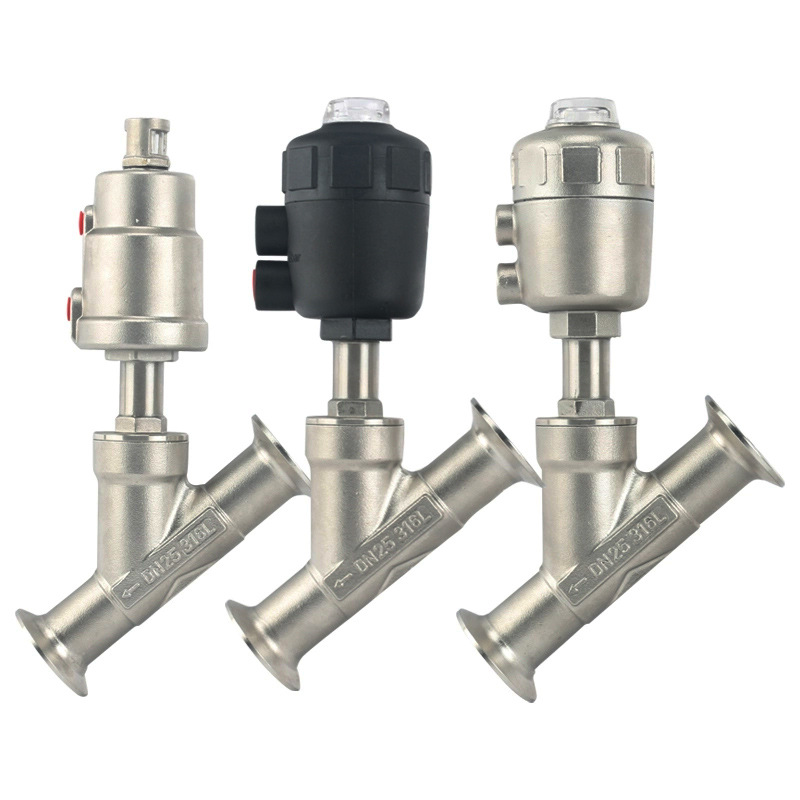
Understanding the AB Valve and Its Function in Flow Control
Defining AB Valve and Its Significance in Valve Automation
AB valves, also known as Automated Balancing Valves, represent a major breakthrough for controlling flow in industrial settings. They bring together accurate flow control with automatic adjustments, making them quite different from traditional methods. These smart valves can manage not just fluid flow but also pressure levels and temperature variations within complex systems like chemical plants and building HVAC systems. What sets them apart is their ability to adjust themselves without needing someone standing there watching all day long. Instead of relying on manual intervention, AB valves incorporate sensors that continuously monitor conditions and make changes as needed right when they're required. According to recent data from an industry study conducted last year, companies that switched to these automated systems saw around a third less energy wasted on improper flow management compared to what happens with old fashioned manual controls.
How AB Valve Enables Precise Flow Control and Throttling Performance
The AB valve features a modulated disc-and-seat mechanism enabling 0–100% linear flow adjustment with ±2% accuracy, even under high pressure–significantly outperforming conventional globe valves, which typically achieve only ±10% precision. Key performance advantages include:
- Response Time: 85% faster actuation than pneumatic quarter-turn valves
- Sealing Integrity: Zero-leakage shutoff at pressures up to 620 psi
- Turndown Ratio: 100:1 flow range for stable control at minimal throughput
These characteristics make AB valves ideal for applications demanding ultra-fine regulation, such as catalyst injection and pharmaceutical batch processing.
Integration of AB Valves Within Industrial Automation Systems
AB valves integrate natively with distributed control systems (DCS) via industrial protocols like Modbus TCP and PROFINET, enabling seamless automation. This connectivity supports:
| Automation Feature | Operational Impact |
|---|---|
| Real-Time Flow Compensation | Adjusts for pump wear & pipe scaling |
| Predictive Maintenance Alerts | Detects seal degradation 30 days in advance |
| Multi-Valve Synchronization | Coordinates 50+ valves in refinery cracking units |
Leading manufacturers now embed edge computing within valve controllers, reducing reliance on external PLCs by 40% during complex sequences.
The Role of Valve Actuators in Enhancing AB Valve Performance
Electric actuators have become the preferred drive solution for AB valves, delivering 0.01° positioning resolution–far surpassing the 1° standard in hydraulic systems. According to a 2024 actuation benchmark study, brushless DC motors enhance:
- Energy Efficiency: 62% reduction in power consumption
- Cycle Durability: 2 million cycles without degradation
- Emergency Response: Fail-safe closure in <300ms during power loss
These improvements allow AB valves to consistently meet ISO 5208 Class VI sealing standards, even when handling aggressive media like chlorine gas or high-temperature steam.
Valve Actuation Mechanisms: Driving AB Valve Automation
Principles of Valve Actuation in AB Valve Operation
AB valves need actuation systems to turn different forms of energy like electricity, compressed air, or hydraulic pressure into actual movement. The electric versions typically have servo motors that let them position things really accurately. Pneumatic systems work differently by using compressed air, which makes them great for situations where they need to respond quickly over many cycles. For big pipes and tough conditions, hydraulic actuators are usually the way to go because they can generate much stronger force. These different options help AB valves keep control of fluid flow pretty consistently, staying within about 2% of whatever setting is needed when adjusting or closing off completely. This kind of precision matters a lot in industrial settings where even small deviations can cause problems downstream.
Electro-Pneumatic and Solenoid-Driven Actuation in AB Valves
Modern AB valves often employ electro-pneumatic actuators combined with solenoid valves to balance speed and precision. Solenoid-driven systems deliver millisecond-level on/off control, making them ideal for emergency shutoffs. Electro-pneumatic hybrids support programmable modulation, essential for accurate chemical dosing.
| Actuation Type | Response Time | Torque Range | Best Use Case |
|---|---|---|---|
| Electric | 2–15 seconds | Up to 5,000 Nm | Precision flow modulation |
| Pneumatic | <1 second | Up to 20,000 Nm | High-speed diverting |
Synchronization With PLCs for Real-Time Industrial Flow Control
When synchronized with PLCs (Programmable Logic Controllers), AB valves achieve optimal performance. Integrated feedback loops allow real-time adjustments based on sensor data, reducing process latency by 80% compared to manual systems–particularly beneficial in batch mixing and thermal management applications.
AB Valve Applications in Fluid Mixing and Diversion Processes
3-Way Valve Functionality in Fluid Control as Applied to AB Valves
AB valves work with three ports marked A, B, and AB to control where fluids go. These valves handle two main tasks really well switching between different flow paths and combining separate streams into one. Take hydronic heating systems as an example. The AB port lets these valves blend hot and cold water together, creating output temperatures that stay pretty close to what's needed, usually within about 1.5 degrees Fahrenheit. Because they can do both jobs at once, installers don't have to put in several regular two-way valves instead. This saves money on installations, especially when dealing with complicated pipe networks, sometimes reducing costs by around 30%. That makes them quite popular among engineers working on building systems.
Application of AB Valves in Heating, Cooling, and Chemical Processing
In industrial thermal management, AB valves support:
- Temperature regulation: Blending coolant streams to stabilize reactor temperatures
- Energy recovery: Redirecting waste heat to preheat incoming fluids
- Batch processing: Alternating chemical feeds between reactors
A 2023 analysis of pharmaceutical facilities revealed that AB valves reduced cross-contamination risks by 92% compared to traditional multi-valve configurations in multi-product lines.
Case Study: AB Valve Performance in Chemical Plant Fluid Management
A specialty polymer plant replaced legacy multiport valves with AB valves for additive distribution, achieving:
| Metric | Improvement |
|---|---|
| Valve-related downtime | 64% reduction |
| Seal replacement frequency | From quarterly to biennial |
| Contamination incidents | 0 over 18 months |
The streamlined design eliminated 14 leak-prone joints per line, significantly improving system integrity.
Comparison with Standard Multiport Valves: Advantages in Diverting Applications
| Feature | AB Valves | Standard Multiport Valves |
|---|---|---|
| Port configuration | 3 ports (A/B/AB) | 4–6 ports |
| Flow reversal speed | 0.8–1.2 seconds | 2.5–3.7 seconds |
| Maintenance intervals | 24–36 months | 6–12 months |
| Space requirement | 40% smaller footprint | Multi-component layouts |
Due to their mechanical simplicity, AB valves offer a 38% lower total cost of ownership over a 10-year lifecycle in diversion-focused systems.
Valve Selection Criteria for Industrial AB Valve Implementation
Evaluating AB Valve Against Other Control Valve Types
AB valves outperform traditional ball and globe valves in throttling accuracy and automation compatibility. A 2023 fluid control study showed AB valves maintain ±2% flow rate accuracy under variable pressure, surpassing ball valves (±8%) in precision-critical settings. Their linear motion design also avoids cavitation issues common in rotary alternatives.
| Valve Type | Control Precision | Maintenance Frequency | Lifetime Cost (20-year span) |
|---|---|---|---|
| AB Valve | High | Low | $1.2M |
| Ball Valve | Moderate | Moderate | $1.8M |
| Globe Valve | High | High | $2.1M |
Matching AB Valves to Process Conditions: Pressure, Media, and Temperature
Most problems with AB valves in corrosive settings actually come down to material compatibility issues, accounting for about 87% of all failures according to ANSI standards from 2021. When dealing with acidic substances, stainless steel valves work well under pressures around 150 psi at temperatures hitting 300 degrees Fahrenheit. Carbon steel options are better suited for non-corrosive gases where pressures can go as high as 450 psi. Choosing the right seat material matters a lot too. PTFE seals tend to break down about 40% quicker when exposed to alkaline solutions than their ceramic counterparts. This makes it really important to match materials specifically to what they'll be handling in real world applications across different industries.
Lifecycle Cost Analysis: AB Valve Versus Alternative Automation Systems
AB valves do come with a price tag that's about 15 to 20 percent higher upfront compared to diaphragm valves. But looking at the bigger picture, they need around 30% less maintenance each year which actually balances things out over time. According to recent 2023 data, most companies see a return on investment within seven years. When it comes to installation costs, there's another angle worth mentioning. Standardized actuator interfaces cut down integration expenses by roughly $18,000 per unit compared to those proprietary coupling systems everyone seems to hate. And let's not forget about energy savings either. In high pressure steam applications specifically, these AB valves slash pumping losses by approximately 12% when stacked against traditional globe valves. That kind of efficiency really adds up across multiple installations.
Future Trends in AB Valve Automation Technology
Smart Sensors and IIoT Integration in Next-Generation AB Valve Systems
Next-generation AB valves increasingly incorporate smart sensors and Industrial Internet of Things (IIoT) connectivity to enable predictive maintenance and adaptive process control. Embedded sensors track flow rates, pressure differentials, and actuator health, transmitting data to centralized platforms. This allows operators to:
- Identify wear patterns in valve seats 12–18 months before failure
- Automatically adjust flow parameters in response to downstream demand
- Reduce manual calibration by 45% compared to non-connected systems
Industry analysis shows plants using IIoT-enabled AB valves achieve 92% first-pass accuracy in fluid diversion tasks–critical for chemical processing and HVAC performance.
Energy Efficiency and Predictive Maintenance in Modern AB Valve Automation
Emerging AB valve designs emphasize energy conservation through dynamic sealing technologies and low-friction actuators. A 2025 industry benchmark study found these innovations reduce compressed air consumption in pneumatic systems by 27–33% versus legacy models. Predictive algorithms analyze historical performance to:
- Schedule part replacements during planned outages
- Optimize lubrication intervals based on actual usage
- Prevent unplanned shutdowns due to diaphragm failure
Facilities adopting these strategies report 40% lower lifecycle costs over five years, reinforcing AB valves as a sustainable foundation for long-term automation infrastructure.
FAQ Section
What is an AB valve?
An AB valve, or Automated Balancing Valve, is an advanced tool used for managing flow, pressure, and temperature in industrial systems. It utilizes sensors and automatic adjustments for precise control without manual intervention.
Where are AB valves commonly used?
AB valves are typically used in chemical plants, building HVAC systems, pharmaceutical batch processing, and other complex systems demanding precise flow control.
What are the advantages of using AB valves?
AB valves offer improved response times, zero-leakage shutoff, ultra-fine regulation capabilities, and a lower total cost of ownership compared to traditional valves.
Are AB valves energy efficient?
Yes, AB valves are designed for energy efficiency, notably reducing energy wastage in flow management and power consumption during operation.
Table of Contents
- Understanding the AB Valve and Its Function in Flow Control
- Valve Actuation Mechanisms: Driving AB Valve Automation
- AB Valve Applications in Fluid Mixing and Diversion Processes
- Valve Selection Criteria for Industrial AB Valve Implementation
- Future Trends in AB Valve Automation Technology
- FAQ Section