
 EN
EN
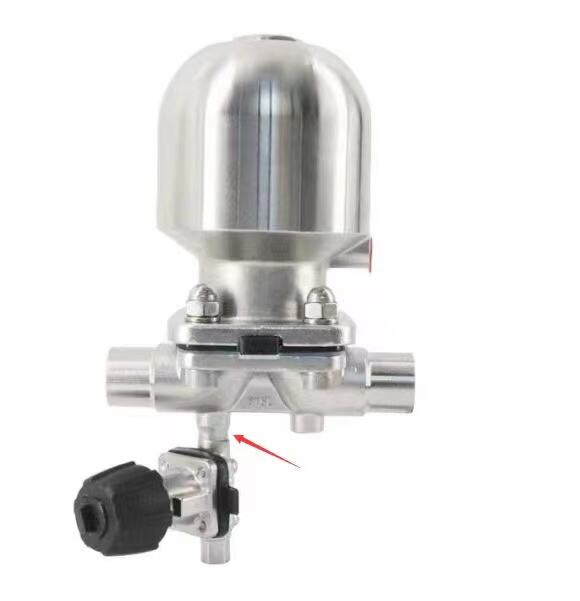
Understanding Chemical Resistance Mechanisms in Diaphragm Valve Elastomers
Swelling, Extraction, and Oxidative Degradation: Why EPDM, NBR, and Butyl Fail in Strong Acids and Halogens
Standard elastomers—EPDM (Ethylene Propylene Diene Monomer), NBR (Nitrile Butadiene Rubber), and butyl rubber—lack the molecular stability needed for aggressive chemical service. They degrade through three interrelated mechanisms: swelling, extraction, and oxidative degradation. Swelling occurs when solvents penetrate the polymer matrix, increasing volume by 20–40% and critically reducing compression set resistance and seal force. Extraction dissolves plasticizers and low-molecular-weight additives, causing up to 35% hardness loss (ASTM D471) and embrittlement. Oxidative degradation—driven by strong oxidizers like chlorine dioxide or concentrated nitric acid—cleaves carbon backbone chains, slashing tensile strength by more than half and accelerating crack growth. Collectively, these mechanisms lead to rapid functional failure in halogens or acids above 10% concentration, often resulting in diaphragm valve leaks within months of installation.
| Degradation Mechanism | Effect on Elastomer | Common Failure Scenarios |
|---|---|---|
| Swelling | Volume increase >30%, loss of compression force | Acetone service, halogenated solvents |
| Extraction | Hardness reduction >35%, embrittlement | Ketones, esters with plasticizer-dependent compounds |
| Oxidative Degradation | Chain scission, crack propagation >2mm/yr | Chlorine dioxide, concentrated nitric acid |
PTFE, FKM, and FFKM: Molecular Stability Advantages for High-Concentration Acids and Alkalis
Fluorinated polymers—PTFE (Polytetrafluoroethylene), FKM (Fluorocarbon Rubber), and FFKM (Perfluoroelastomer)—deliver exceptional resistance due to the strength and inertness of carbon–fluorine bonds, which possess a dissociation energy of 485 kJ/mol—significantly higher than standard C–C bonds (347 kJ/mol). This molecular stability prevents chain-scission reactions in highly corrosive environments, including 98% sulfuric acid and 50% sodium hydroxide. PTFE’s highly crystalline structure yields zero measurable swelling even after 5,000 hours of immersion (ASTM D471, 2023 edition). FFKM extends this performance with full perfluorination, retaining elasticity down to –29°C while resisting amines and oxidizers that rapidly degrade FKM. As a result, FFKM-diaphragm valves operate reliably in >95% sulfuric acid at 150°C with less than 1% deformation after 10,000 flex cycles—demonstrating unmatched system-level durability.
System-Level Material Compatibility: Matching Diaphragms, Seats, and Valve Bodies
Avoiding Hidden Failure Modes: Thermal Expansion Mismatch and Compression Set in PTFE-Lined Seats vs. Elastomeric Diaphragms
Material incompatibility between PTFE-lined seats and elastomeric diaphragms introduces subtle yet critical failure modes—not captured in standard chemical compatibility charts. PTFE exhibits a coefficient of thermal expansion roughly 10× greater than FKM (0.11% vs. 0.01% per °C), causing progressive seat distortion during thermal cycling. In processes with ±30°C swings—common in sterilization or batch cleaning—the mismatch induces micro-leak paths and uneven load distribution across the diaphragm. Simultaneously, elastomers undergo compression set: permanent deformation under sustained compressive stress. At 80°C, NBR diaphragms lose nearly 40% of their sealing force after just 1,000 cycles. Effective mitigation includes using pre-shrunk PTFE components to minimize post-installation growth, limiting initial elastomer compression to ≤25%, and specifying FFKM diaphragms—validated to retain <15% compression set even at 150°C.
Material Pairing Best Practices — e.g., PVDF Body + FFKM Diaphragm + PTFE Seat for Chlorine Dioxide Service
Optimal diaphragm valve performance emerges from harmonizing chemical resistance with mechanical compatibility—not selecting materials in isolation. For chlorine dioxide service (pH 4–10, 50°C), the following pairing delivers field-proven reliability:
| Component | Material | Rationale |
|---|---|---|
| Body | PVDF | Exceptional resistance to halogens and low permeability to reactive gases |
| Diaphragm | FFKM | Zero swelling in oxidizers; maintains fatigue resistance and elasticity under cyclic flexing |
| Seat | PTFE | Chemically inert, thermally stable surface with minimal cold flow under compression |
This configuration accommodates up to 120% differential thermal expansion between components without compromising seal integrity—and eliminates galvanic pathways inherent in metallic assemblies. Field data from bleach processing plants shows a 7× increase in mean time between failures (MTBF) compared to mismatched configurations.
Real-World Validation: Interpreting Compatibility Data and Mitigating Galvanic & Crevice Risks
Beyond Charts: Why ASTM D471 Immersion Tests Don’t Capture Dynamic Flow or Cyclic Pressure Effects on Diaphragm Valves
ASTM D471 immersion testing provides essential baseline data—but it does not replicate the dynamic stresses diaphragm valves endure in operation. Static immersion ignores fluid shear forces, micro-cavitation, and pressure-induced flexing that accelerate degradation far beyond what laboratory exposure predicts. Repeated diaphragm flexing mechanically fatigues the polymer while continuously exposing fresh, unreacted surfaces to corrosive media—a synergistic effect absent in beaker tests. A 2023 Fluid Sealing Association study found that PTFE diaphragms exhibiting <1% volume change in static 96% sulfuric acid immersion developed cracks 300% faster under realistic 15 psi pressure cycling. Engineers must therefore supplement compatibility charts with dynamic validation—using protocols that replicate actual flow velocity, pressure cycle frequency, temperature ramp rates, and duty cycle—to avoid premature field failures.
Galvanic Corrosion Case Study: Stainless 316 Hardware in PVDF-HFP Bodies — When 'Non-Metallic' Isn’t Fully Isolated
The assumption that “non-metallic” valve bodies eliminate corrosion risk is dangerously incomplete—particularly when conductive polymer variants are involved. In chlorine dioxide systems, carbon-filled PVDF-HFP bodies (used to enhance mechanical strength) exhibit electrical conductivity (~10³ S/cm), enabling electron transfer with stainless steel 316 fasteners when trace electrolytes breach seals. This establishes a galvanic couple where 316 SS becomes the anode, accelerating its dissolution. Field audits across six pharmaceutical facilities revealed bolt failure in under 18 months—even though material selection charts listed both components as “compatible.” The Materials Performance Institute (2022) confirmed this mechanism, reporting a 27× increase in anodic dissolution rate versus fully isolated metallic systems. Proven mitigation strategies include replacing conductive PVDF-HFP with insulating PTFE liners—or installing dielectric isolation kits (e.g., non-conductive washers, sleeves, and coatings), which reduced galvanic failures by 94% in controlled plant trials.
FAQ
Why do standard elastomers like EPDM, NBR, and butyl fail in strong acids and halogens?
Standard elastomers fail due to swelling, extraction, and oxidative degradation. These mechanisms undermine the material's structural integrity, leading to rapid functional failures in highly corrosive environments.
How do fluorinated polymers like PTFE, FKM, and FFKM provide superior chemical resistance?
Fluorinated polymers have strong carbon-fluorine bonds, which resist chain-scission and degradation in aggressive chemicals. They exhibit exceptional durability and stability even under extreme conditions.
What are the best material pairings for diaphragm valves used in chlorine dioxide service?
A proven combination includes a PVDF body, an FFKM diaphragm, and a PTFE seat. This pairing ensures chemical resistance, mechanical compatibility, and durability under challenging conditions.
Why don’t typical ASTM D471 immersion tests capture real-world stresses on diaphragm valves?
ASTM D471 tests ignore dynamic factors like fluid shear forces, pressure cycling, and thermal changes, all of which contribute to accelerated degradation in operational environments.
How can galvanic corrosion be prevented in diaphragm valve assemblies?
To minimize galvanic corrosion, you can use insulating materials like PTFE liners or install dielectric isolation kits to eliminate electron transfer pathways between metal components and conductive polymers.
Table of Contents
- Understanding Chemical Resistance Mechanisms in Diaphragm Valve Elastomers
- System-Level Material Compatibility: Matching Diaphragms, Seats, and Valve Bodies
- Real-World Validation: Interpreting Compatibility Data and Mitigating Galvanic & Crevice Risks
-
FAQ
- Why do standard elastomers like EPDM, NBR, and butyl fail in strong acids and halogens?
- How do fluorinated polymers like PTFE, FKM, and FFKM provide superior chemical resistance?
- What are the best material pairings for diaphragm valves used in chlorine dioxide service?
- Why don’t typical ASTM D471 immersion tests capture real-world stresses on diaphragm valves?
- How can galvanic corrosion be prevented in diaphragm valve assemblies?