
 EN
EN
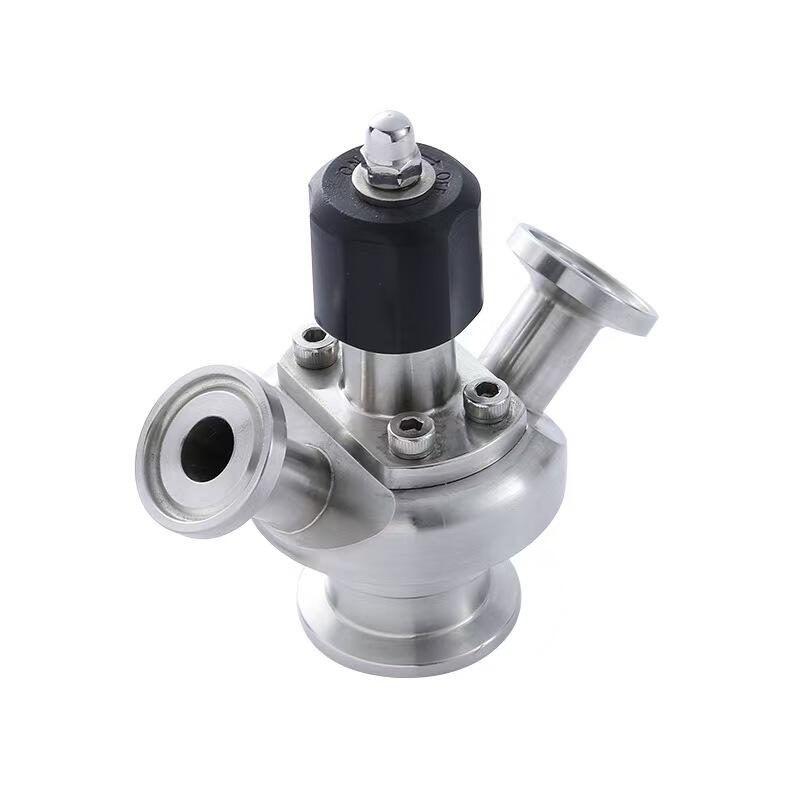
Core Hygienic Design Principles for Sampling Valves
Eliminating Microbial Havens: Crevice-free geometry and full drainability
Sampling valve design must eliminate crevices—micro-environments where pathogens like Listeria and Salmonella persist. EHEDG research confirms that gaps under 0.2 mm trap residual product and become bacterial reservoirs, enabling biofilm formation. Hygienic valves mitigate this through three non-negotiable features:
- Continuous, weld-sealed internal surfaces (no threaded joints)
- A minimum 3° downward slope to ensure gravity-driven drainage
- Hemispherical chamber geometry that prevents fluid stagnation
These integrated design choices reduce contamination risk by 87% compared to conventional threaded valves. Full drainability is especially critical for high-risk applications—including infant formula, biologics, and injectables—where even trace residuals can compromise sterility or trigger regulatory action.
Surface Integrity Matters: RA ≤ 0.8 µm finish and its impact on biofilm resistance
Surface roughness (Ra) is a decisive factor in microbial adhesion. An Ra ≤ 0.8 µm finish—achievable via electropolishing of 316L stainless steel—creates a near-mirror surface where biofilm formation drops exponentially: studies show 99% less biofilm accumulation versus Ra 3.2 µm surfaces. This ultra-smooth integrity:
- Eliminates microscopic niches for pathogen colonization
- Reduces protein adhesion by 73%, per 2023 Institute of Food Technologists (IFT) research
- Ensures complete, uniform contact with CIP chemicals and sterilants
Electropolished 316L delivers both this surface precision and long-term corrosion resistance—making it the industry benchmark for hygienic sampling components.
Material Selection and Regulatory Alignment for Sampling Valves
Metals and elastomers under scrutiny: AISI 316L traceability and FDA/USP Class VI compliance
Material integrity starts with certified AISI 316L stainless steel: its low carbon content (<0.03%) and controlled sulfur levels (<150 ppm) prevent intergranular corrosion during repeated CIP/SIP cycles and exposure to acidic or caustic media. Full traceability—from mill certificates to heat numbers—is essential for audit readiness and regulatory validation.
When it comes to elastomeric parts used in food contact applications, compliance with FDA 21 CFR 177.2600 and USP Class VI is non-negotiable for most manufacturers. These certifications basically ensure there's nothing left behind after rigorous testing conditions involving ethanol, hexane exposure, and extreme pH levels. What does this mean? No harmful substances getting into products through leaching processes. There was actually a real world situation back in 2023 where a dairy processor had serious issues with silicone migrating from their seals until they upgraded to USP Class VI compliant materials. That change stopped the problem dead in its tracks and saved what would have been a massive product recall otherwise.
Certification frameworks: EHEDG, 3-A Sanitary Standards, and BPE alignment
When it comes to proving hygienic performance, third party certifications offer something concrete and enforceable. Take EHEDG Type EL-A Class I for instance. This standard demands surface finishes no rougher than 0.8 micrometers and welding that leaves no hidden corners where bacteria can hide. Real world tests from last year's contamination study show these specs actually reduce biofilm risks by around 92% in pharmaceutical environments. The 3-A Sanitary Standards take another approach, focusing on internal radii of at least 6.4 mm so liquids drain completely without residue buildup. Meanwhile, proper ASME BPE alignment keeps those orbital welds intact even when pressure spikes hit 10 bar during operation. Plants that stick to all three certification systems tend to see about 40% fewer problems with sterility during FDA audits. These numbers tell us something important: when different standards work together, they create real improvements in how clean facilities stay day after day.
CIP/SIP Compatibility: Ensuring Sterility and Reliability in Sampling Valve Operation
Thermal and pressure resilience: Validated performance from –6°C to 230°C and up to 10 bar
Sampling valves designed for hygienic applications need to handle all sorts of temperature extremes and mechanical stresses that come with modern processing environments. These valves should work reliably from as low as -6°C when stored cryogenically up to around 230°C during steam sterilization processes. They also need to maintain their structural integrity at pressures reaching 10 bar so there's no risk of leaks during those fast cleaning cycles known as CIP. The ability to resist sudden temperature changes and keep seals intact after many usage cycles matters a lot in real world operations. According to recent data from the 2024 Pharma Compliance Report, nearly half (about 47%) of contamination problems in pharmaceutical settings actually trace back to materials failing because they couldn't stand up to these thermal demands over time.
Actuation flexibility: Manual, pneumatic, and hygienic position feedback for critical sampling
Getting reliable operation really depends on having flexible actuation options available. For those occasional samples that don't pose much risk, simple manual handles work just fine. When it comes to integrating with automated cleaning processes like CIP or SIP, pneumatic systems are the way to go. And let's not forget about those clean, contact-free sensors that check if something is properly closed without messing with sterility standards these days. They actually help meet those strict FDA regulations about data integrity from part 11 of their code. All told, this mix of different modes cuts down on hands-on work by around 70 percent according to recent benchmarks from the Aseptic Operations Report in 2023, which means fewer chances for contamination in places where everything has to stay super clean.
Real-World Validation: Performance Outcomes of Hygienic Sampling Valves
Manufacturers who install sampling valves meeting EHEDG and 3A standards typically see around 45 percent fewer contamination problems. This improvement comes down to the design features these valves have - no hidden crevices where bacteria can hide, plus surfaces polished to below 0.8 microns roughness. When facilities upgrade to automated cleaning systems compatible with CIP and SIP protocols, they notice something else happening too. Human mistakes drop off significantly, which means fewer batches get thrown away because of quality issues. Maintenance teams also find themselves working less frequently since equipment lasts longer between servicing. For those using certified materials such as AISI 316L stainless steel, there's another benefit worth mentioning. These valves keep their shape and finish intact even after thousands of sterilization cycles. According to recent industry data from processing efficiency studies, this durability translates into about 15% savings on overall costs when looking at the entire lifespan of the valve.
FAQ
What are the key principles of hygienic design for sampling valves?
The key principles include eliminating crevices and ensuring full drainability, maintaining a surface finish of RA ≤ 0.8 µm, and using continuous, weld-sealed internal surfaces.
How does surface integrity impact sampling valve effectiveness?
Surface integrity is crucial as a smoother surface (e.g., RA ≤ 0.8 µm) reduces microbial adhesion and biofilm formation, improving the overall cleanliness and effectiveness of the valve.
Why is material selection important for sampling valves?
Proper material selection, like AISI 316L stainless steel, is important to prevent corrosion and ensure compliance with regulations such as FDA and USP Class VI, thus safeguarding against contamination.
What role do certifications like EHEDG and 3-A Sanitary Standards play?
Certifications help ensure that sampling valves meet strict hygienic standards, reducing contamination risks and aiding in regulatory compliance.
How do sampling valves support CIP/SIP processes?
Sampling valves are designed to withstand the thermal and mechanical stresses of CIP/SIP processes, ensuring sterilization and reliability without leaks or failures.
Table of Contents
- Core Hygienic Design Principles for Sampling Valves
- Material Selection and Regulatory Alignment for Sampling Valves
- CIP/SIP Compatibility: Ensuring Sterility and Reliability in Sampling Valve Operation
- Real-World Validation: Performance Outcomes of Hygienic Sampling Valves
-
FAQ
- What are the key principles of hygienic design for sampling valves?
- How does surface integrity impact sampling valve effectiveness?
- Why is material selection important for sampling valves?
- What role do certifications like EHEDG and 3-A Sanitary Standards play?
- How do sampling valves support CIP/SIP processes?