
 EN
EN
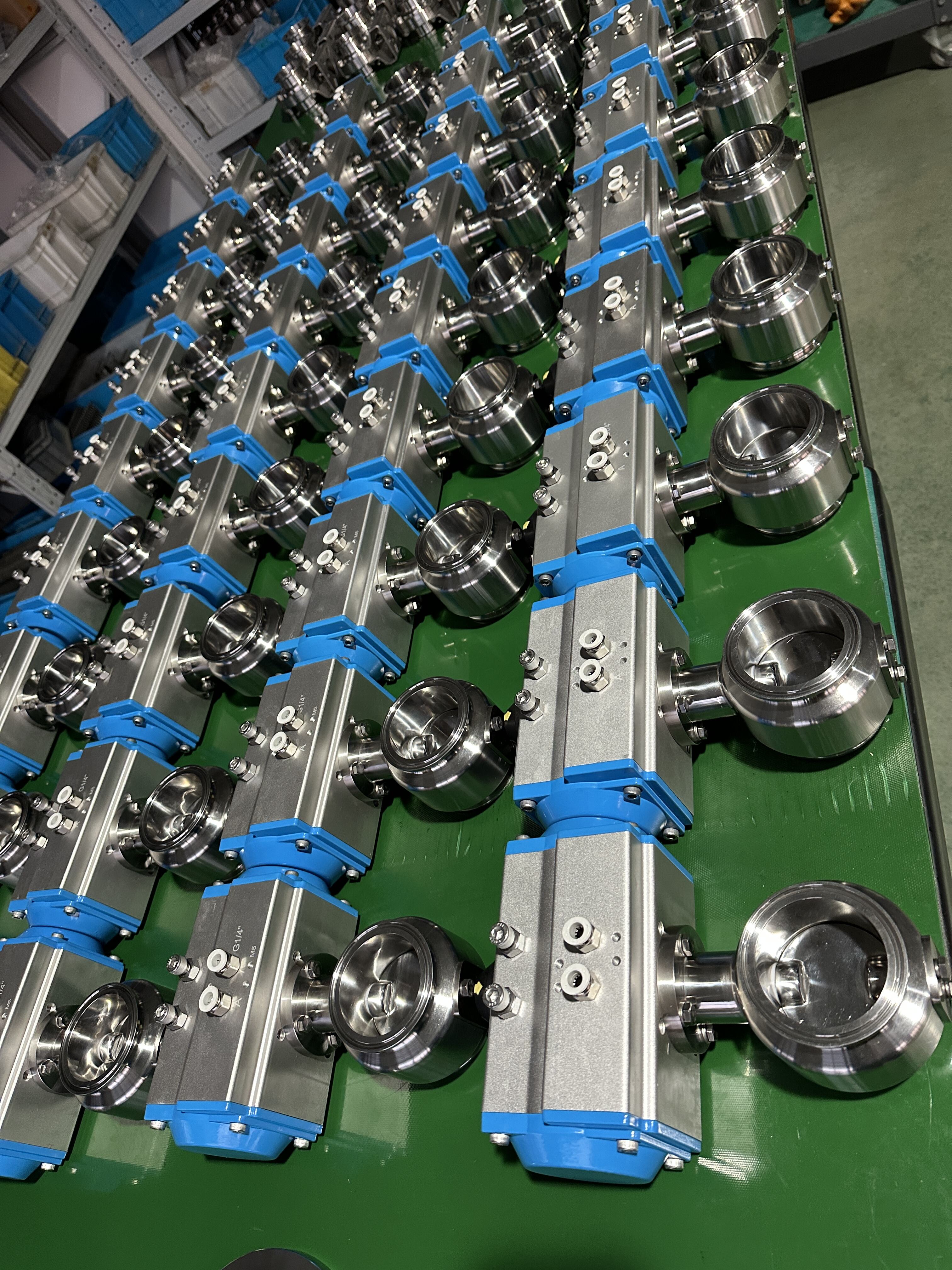
Hygienic Design: Preventing Contamination Through Crevice-Free Construction
Why Conventional Valves Compromise Purity in Pharma and Food Processing
Most traditional valves come with threaded connections, hidden bolts inside, and those tricky little pockets where germs and leftover material tend to hang around. These bad design choices basically become breeding grounds for microbes that just won't clean out properly, particularly problematic in places making sterile medicines or handling dairy products. Research indicates that regular valve crevices hold about 40 percent more dirt behind after washing than valves without these gaps. The problem gets really serious when dealing with things like baby formula or biological drugs, because even tiny bits of contamination lead to massive recalls. Manufacturers typically lose around seven hundred forty thousand dollars each time this happens according to some recent industry reports from Ponemon back in 2023.
The Role of Aseptic Design in Contamination Control
The way sanitary butterfly valves prevent contamination relies on several key design features. First off, they use full face gaskets along with orbital welding techniques that get rid of those pesky threaded connections and all the little crevices that come with them. Then there's the electropolished 316L stainless steel surface finish (with a Ra value below 0.8 microns) which makes it much harder for bacteria to stick around compared to regular textured or mechanically polished metal surfaces. And finally, these valves create continuous flow paths without any obstructions, ensuring everything drains completely with no hidden spots where stuff can collect. Studies looking at sanitary conveyors have actually shown that this kind of crevice free construction cuts down biofilm formation by about two thirds. That's pretty significant when trying to stay compliant with those strict FDA CFR 211 standards as well as EHEDG requirements in food processing facilities.
Case Study: 92% Bioburden Reduction After Switching to Sanitary Butterfly Valves (FDA Audit Report, 2023)
A vaccine manufacturer replaced diaphragm valves with zero-cavity sanitary butterfly valves across its fill-line. Post-implementation data showed:
- Bioburden counts dropped from 12 CFU/ml to â1 CFU/ml
- CIP cycle time reduced by 25 minutes per batch
- Zero contamination-related rejects over 18 months
FDA auditors attributed this performance to the valveâs seamless body geometry and electropolished finishâconfirming the 92% bioburden reduction cited in their 2023 audit report.
High-Integrity Sealing: Achieving Bubble-Tight Performance with FDA- and 3-A-Compliant Materials
In pharmaceutical and food processing, leak-proof sealing is non-negotiable for material purity. Sanitary butterfly valves must exceed FDA and 3-A standards to prevent microbiological ingress or product lossâfailures here risk contamination, production halts, and regulatory penalties.
How Zero-Offset Design Enables Leak-Proof Sealing in Sanitary Butterfly Valves
The zero offset design basically positions the disc right at the center of the valve body, which helps prevent any kind of mechanical deflection when pressure builds up. Once it's closed, the forces spread out evenly across the surface, so we get consistent contact between the disc and the rubber seat material. This results in really low leakage rates, sometimes as little as half a bubble per minute according to standard ASME B16.104 from 2019. On the flip side, those offset designs tend to create uneven torque distribution. What happens is these tiny gaps form where there shouldn't be any space at all, and these spots become real troublemakers for regular valves over time.
Comparing EPDM, Silicone, and PTFE Seals for SIP and High-Temp CIP Applications
Selecting seal materials for SIP (Steam-In-Place) and CIP (Clean-In-Place) requires balancing thermal resilience with chemical compatibility:
| Material | Max Temp | Chemical Resistance | Best Use Case |
|---|---|---|---|
| EPDM | 135°C | Acids/alkalis | Moderate CIP cycles |
| Silicone | 230°C | Steam, ozone | High-temp SIP |
| PTFE | 260°C | Aggressive solvents | Corrosive SIP/CIP |
Silicone withstands repeated 180°C sterilization but degrades in strong alkalis. PTFE handles extreme pH (0â14) yet costs ~40% more than EPDM. EPDM offers economical, reliable sealing below 135°Câbut fails in hydrocarbon-rich environments.
Smooth Surface Finish and Material Quality: How 316L Stainless Steel Enhances Purity
Polished Surfaces (Ra â 0.8 µm) and Elimination of Dead Zones to Prevent Bacterial Adhesion
Butterfly valves made from 316L stainless steel that meets ASTM A270 standards get their surfaces down to around 0.8 microns roughness after going through electropolishing treatment. This process creates an extremely smooth finish that helps keep pathogens from sticking to the valve surfaces. Tests show these smooth finishes cut down on bacterial growth by roughly 70% compared to regular finishes. What makes these valves so effective is they don't have any tiny holes, scratches, or other places where stuff can hide. These are what people call dead zones in the industry. When combined with designs that eliminate crevices, the valves drain completely during cleaning processes. This means they stay sterile longer in facilities that need to follow FDA regulations for food safety.
CIP/SIP Compatibility: Ensuring 100% Cleanability and Sterile Process Assurance
Real-Time CIP Validation Using Integrated Conductivity and Temperature Monitoring
The latest generation of sanitary butterfly valves now comes equipped with built-in conductivity meters and temperature probes that check CIP cycles as they happen. These smart systems keep tabs on soap levels and heat treatment throughout the process, so there's no need for workers to take samples manually or guess if things are working properly. When something goes off track, automated warnings pop up right away, which means cleaner equipment every time plus all the paperwork needed for audits is generated automatically. Factories report cutting down their validation checks by around 40% when switching from old school methods to this new tech. Plus, staying ahead of FDA requirements and meeting those tough 3-A food safety standards becomes much easier with concrete data instead of just hoping everything worked out.
Optimizing Valve Position to Reduce Turbulence and Particle Resuspension During Cleaning
Setting sanitary butterfly valves around 85 to 90 degrees open during cleaning in place (CIP) helps create smooth laminar flow rather than turbulent conditions in the system. At this angle, shear forces drop significantly - somewhere around half what they would be otherwise - so particles that get knocked loose don't just settle back down further along the pipeline. The laminar flow pattern makes sure the cleaning solution actually touches all surfaces evenly instead of getting stuck in dead spots. When manufacturers optimize their valve positioning this way, they typically save about a quarter of their water usage per cleaning cycle while still getting rid of all the stubborn biofilms. These improvements work especially well when paired with surfaces finished to Ra values below 0.8 microns, giving facilities much better assurance that their processes remain truly sterile.
FAQ
What is crevice-free construction?
Crevice-free construction refers to a design that eliminates gaps and pockets in equipment where bacteria and dirt can accumulate, enhancing sanitation.
Why are sanitary butterfly valves preferred in contamination control?
Sanitary butterfly valves are designed without threads or crevices, have electropolished surfaces to reduce bacterial adhesion, and offer continuous flow paths which prevent contamination.
What is the significance of 316L stainless steel in valve construction?
316L stainless steel offers a smooth finish that reduces bacterial growth by eliminating dead zones and allows for easier cleaning and sterilization.
Table of Contents
-
Hygienic Design: Preventing Contamination Through Crevice-Free Construction
- Why Conventional Valves Compromise Purity in Pharma and Food Processing
- The Role of Aseptic Design in Contamination Control
- Case Study: 92% Bioburden Reduction After Switching to Sanitary Butterfly Valves (FDA Audit Report, 2023)
- High-Integrity Sealing: Achieving Bubble-Tight Performance with FDA- and 3-A-Compliant Materials
- Smooth Surface Finish and Material Quality: How 316L Stainless Steel Enhances Purity
- CIP/SIP Compatibility: Ensuring 100% Cleanability and Sterile Process Assurance
- FAQ