 EN
EN
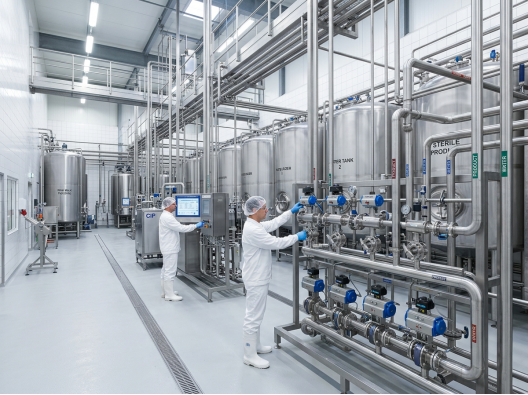
Modern dairy processing is a highly automated, continuous operation where precise fluid control directly determines product safety, quality, and shelf life. From raw-milk reception through pasteurization, separation, fermentation, and filling, every processing stage relies on correctly specified sanitary valves to route product, isolate systems, control flow, and — critically — maintain the hygienic barrier between product and non-product streams.
At the raw-milk reception stage, large-bore butterfly valves and ball valves handle routing and shutoff duties. Raw milk arrives cold (4–8 °C) and must be processed rapidly; valve selection here prioritizes full-bore flow path (minimum pressure drop), fast actuation, and thorough CIP cleanability. AVM's sanitary butterfly valve range is well-suited to this duty, with full-bore designs ensuring maximum throughput capacity.
In the thermal-treatment section — whether pasteurization (72 °C / 15 s HTST) or UHT sterilization (137 °C / 4 s) — valves must withstand elevated temperatures and frequent CIP/SIP cycling. Diaphragm valves and pneumatic ball valves with high-temperature seal materials are standard. For UHT systems where sterile product and CIP chemicals coexist in shared piping, mixproof valves are mandatory to guarantee absolute segregation.
Separation and standardization require precision flow control — typically achieved with modulating diaphragm or control valves enabling accurate fat-content adjustment. In yogurt fermentation, low-shear valve selection is essential to protect delicate curd structure and probiotic viability.
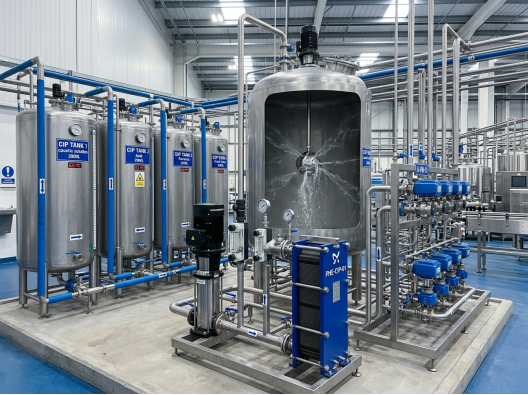
AVM provides a comprehensive valve solution spanning the entire dairy-processing workflow. All products carry 3-A Sanitary authorization and ISO 9001 certification. Materials are 316L stainless steel with FDA-compliant seals engineered to withstand standard dairy CIP chemistries (2% NaOH / 75 °C; 1.5% HNO₃ / 65 °C) and SIP sterilization temperatures.
The filling stage represents the final quality gate. Filling valves demand the highest hygienic standard: zero drip, rapid response, precise volume control, and fully cleanable geometry. Pneumatic diaphragm valves or specialty filling ball valves are typical, often integrated with level sensors and flow meters for automated batch control.
A complete dairy line typically requires dozens to hundreds of sanitary valves across all types. Selecting a single-source supplier with comprehensive product coverage, certified quality systems, and dairy-industry experience — like AVM — simplifies procurement, standardizes quality, and streamlines maintenance inventory management.