 EN
EN
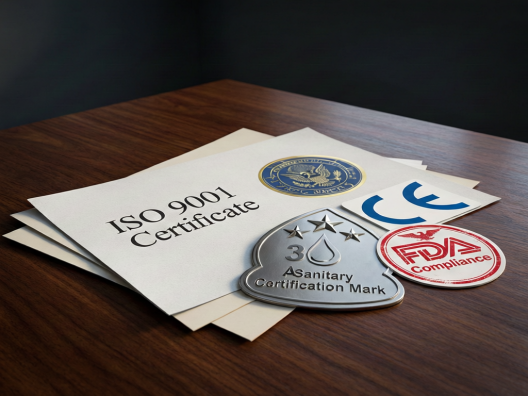
The Pressure Equipment Directive (PED) 2014/68/EU is the foundational EU regulation governing the design, manufacture, and conformity assessment of pressure-bearing equipment. For valve manufacturers, if a product has a maximum allowable pressure PS > 0.5 bar and a nominal size > DN25, compliance with PED is mandatory — and CE marking must be affixed before the product can be legally placed on the European Economic Area market.
PED categorizes equipment into four risk classes (Category I through IV) based on pressure, volume, and fluid group (Group 1 = hazardous fluids; Group 2 = all other fluids). Higher categories require increasingly rigorous conformity-assessment procedures — Category I permits manufacturer self-declaration (Module A), while Category IV demands full type examination plus comprehensive quality-assurance system audit by a Notified Body (Module H or G+D combination).
For most industrial sanitary valves, with working pressures typically in the PN10–PN40 range and media classified as Group 2 liquids, products generally fall into Category I or Category II — requiring either self-declaration with technical-file retention or Notified Body involvement for internal production control. AVM's products comply with both PED and the Machinery Directive (2006/42/EC), with CE marking lawfully affixed to authorize European market placement.
Key PED technical requirements include: materials must conform to recognized harmonized standards (e.g., EN 10088-1 for stainless steels) or undergo particular material appraisal; design calculations must follow harmonized design standards (EN 12516 for pressure-temperature ratings; EN 12266 for testing requirements); and manufacturing must occur within a controlled quality-management system.
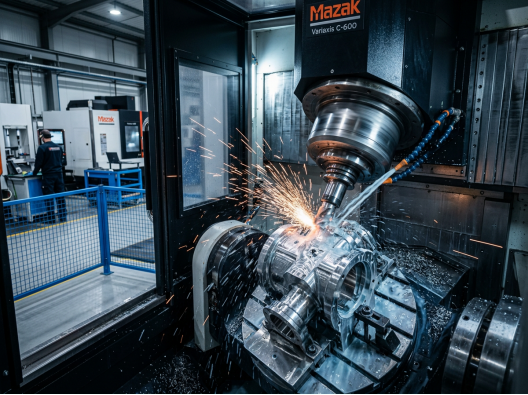
The manufacturer's Technical File typically comprises: design drawings and strength calculations; material certificates (EN 10204 Type 3.1); welding-procedure specifications and welder qualifications (where applicable); non-destructive examination reports (where applicable); hydrostatic or pneumatic test records; and the EU Declaration of Conformity (DoC).
The CE-marking pathway for Chinese valve exporters generally follows: determine applicable directives and equipment classification → select conformity-assessment module(s) → prepare Technical File → engage Notified Body (TÜV, Bureau Veritas, SGS, Lloyd's, etc.) where required → issue EU Declaration of Conformity → affix CE marking.
AVM has exported products since 2006 and possesses extensive experience navigating European market-access requirements. The company's ISO 9001 quality system supports both PED and Machinery Directive compliance. For customers with European export requirements, AVM delivers complete CE technical-file packages ensuring smooth customs clearance and market-surveillance compliance in destination countries.