
 EN
EN
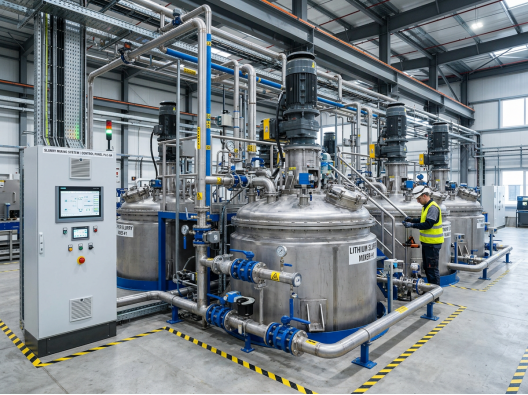
The explosive growth of the global electric-vehicle and energy-storage markets has created surging demand for high-performance fluid-control equipment in lithium-ion battery manufacturing. Electrode slurry — the critical intermediate material in cell production — presents a unique combination of challenges for valve engineers: extreme viscosity, highly abrasive suspended solids, and tight process-control requirements.
Lithium battery electrode slurry is a suspension of active materials (lithium iron phosphate, NCM, or NCA), conductive additives (carbon black, graphene), and binder dissolved in solvent (typically NMP — N-methyl-2-pyrrolidone). Viscosity typically ranges from 2,000 to 30,000 mPa·s, and the mixture contains abundant micrometer-scale hard particles that cause severe erosive wear on pipeline internals and valve sealing surfaces.
Valve selection for battery-slurry service must address several specific requirements: flow passages must be smooth and dead-leg-free to prevent slurry sedimentation and pipe blockage; internal bore dimensions must be sufficiently large with no sudden restrictions that could alter the slurry's carefully controlled rheological properties; and seal materials must offer both high abrasion resistance and chemical compatibility with NMP solvent.
AVM has recognized this emerging market opportunity. The company's sanitary ball valves and butterfly valves — featuring dead-leg-free geometries, full-bore construction, and high-quality surface finishing — have been successfully deployed in multiple new-energy battery projects. The 316L stainless-steel construction with internal surfaces polished to Ra < 0.4 µm significantly retards particle deposition and wear progression.
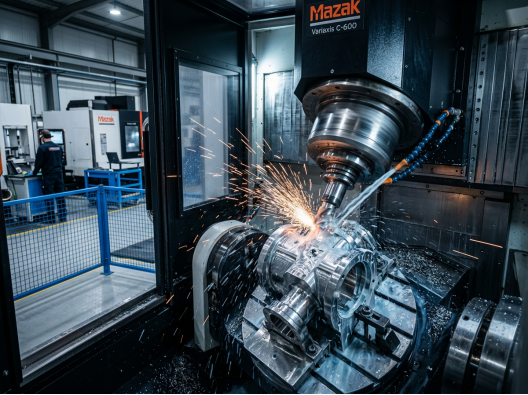
AVM exhibited at the 17th China International Battery Fair in 2025, showcasing fluid-control solutions developed specifically for the new-energy sector. The exhibition's theme — "Connecting the World, Empowering Green, Driving the Future" — underscored the enormous upstream pull that battery-technology revolution exerts on equipment manufacturers.
Slurry-system valves are typically pneumatically actuated for rapid response and automation integration. Additionally, cleaning protocols differ fundamentally from food/pharma CIP: because NMP is volatile and toxic, slurry systems employ solvent-flush cleaning rather than aqueous CIP — imposing additional material-compatibility demands on valve construction.
For battery manufacturers, selecting an ISO 9001-certified valve supplier with comprehensive product range and proven application references is critical for ensuring slurry-system reliability. AVM's deep experience in hygienic fluid control and commitment to continuous innovation positions the company as an increasingly capable partner for new-energy industry customers.