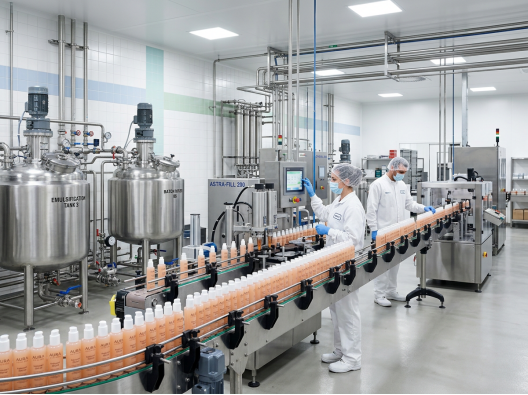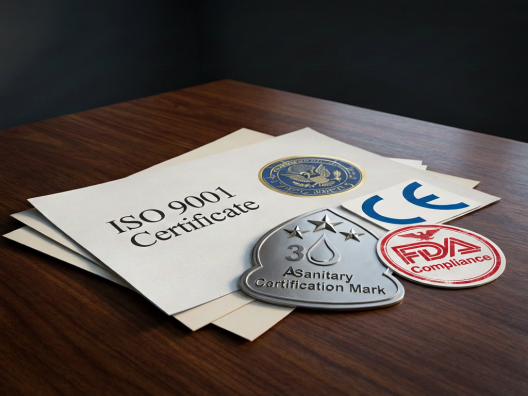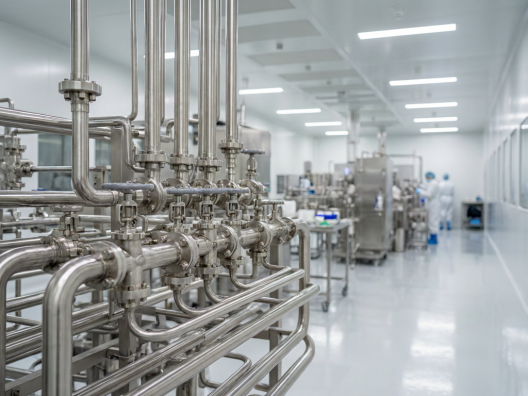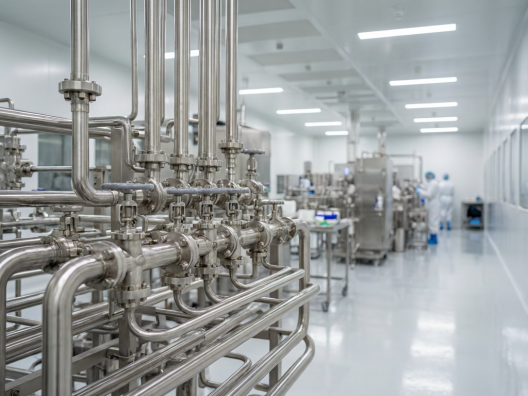
The cosmetics manufacturing industry is undergoing an unprecedented quality transformation. As consumers demand higher product safety and efficacy — and regulators worldwide tighten standards (China's Cosmetics Supervision and Administration Re...
VIEW MORE
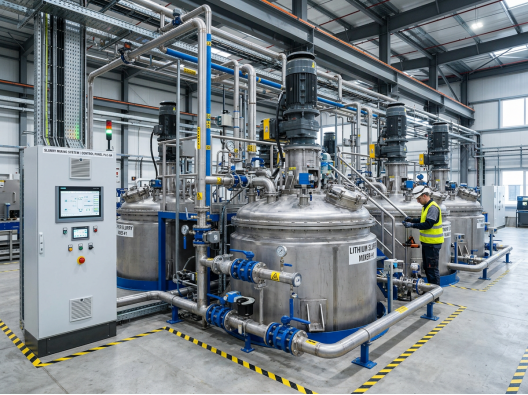
The explosive growth of the global electric-vehicle and energy-storage markets has created surging demand for high-performance fluid-control equipment in lithium-ion battery manufacturing. Electrode slurry — the critical intermediate material i...
VIEW MORE
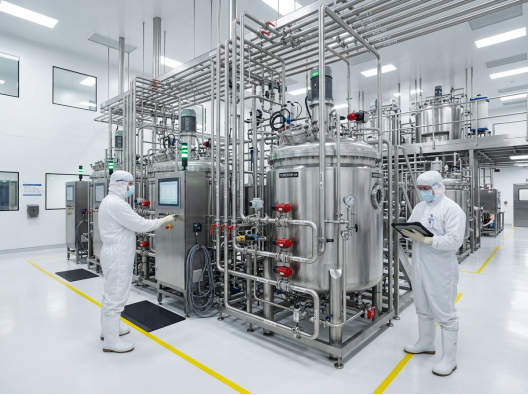
Biopharmaceutical manufacturing — encompassing monoclonal antibodies, vaccines, cell therapies, and gene therapies — imposes the most demanding requirements on fluid-control equipment of any industrial sector. Unlike traditional small-mol...
VIEW MORE
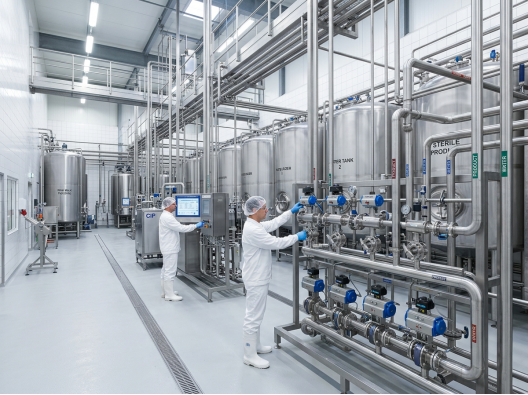
Modern dairy processing is a highly automated, continuous operation where precise fluid control directly determines product safety, quality, and shelf life. From raw-milk reception through pasteurization, separation, fermentation, and filling, every ...
VIEW MORE
Modern dairy processing is a highly automated, continuous operation where precise fluid control directly determines product safety, quality, and shelf life. From raw-milk reception through pasteurization, separation, fermentation, and filling, every ...
VIEW MORE
The 3-A Sanitary Standards program is North America's premier equipment-hygiene certification system for the food, beverage, and dairy industries. Jointly governed by the International Association for Food Protection, the Food Processing Suppliers As...
VIEW MORE
Good Manufacturing Practice (GMP) — the global regulatory framework governing pharmaceutical production — imposes rigorous requirements on the design, selection, installation, and maintenance of process equipment. Within GMP-regulated fac...
VIEW MORE
The sanitary sight glass is an essential auxiliary device in food, pharmaceutical, and chemical piping systems, providing operators with direct visual observation of process conditions — including fluid color, turbidity, flow state, fill level,...
VIEW MORE
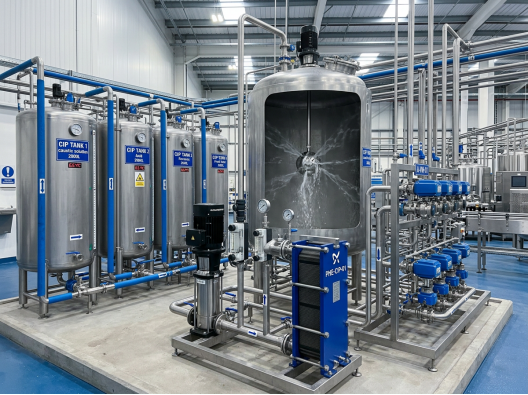
Clean-In-Place (CIP) is the foundational hygiene infrastructure in food, beverage, and pharmaceutical manufacturing — enabling automated, validated cleaning of process equipment without disassembly. A well-designed CIP system reduces downtime b...
VIEW MORE
The Occupational Exposure Band (OEB) classification system is the pharmaceutical industry's standardized framework for categorizing the potency — and therefore the handling hazard — of active pharmaceutical ingredients. Ranging from OEB1 ...
VIEW MORE
In hygienic equipment manufacturing, the internal surface roughness (Ra value) of stainless-steel components is the single most important parameter governing cleanability, microbial control, and product purity. A lower Ra value means a smoother surfa...
VIEW MORE
Selecting the correct pump technology is one of the most consequential engineering decisions in any food-processing facility. The two dominant hygienic pump families — rotary lobe (positive-displacement) and centrifugal — each offer disti...
VIEW MORE