
 EN
EN
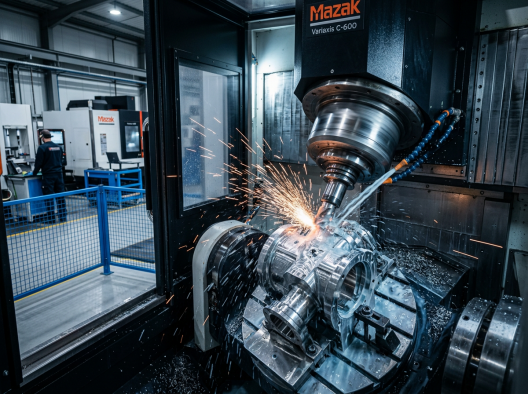
In hygienic equipment manufacturing, the internal surface roughness (Ra value) of stainless-steel components is the single most important parameter governing cleanability, microbial control, and product purity. A lower Ra value means a smoother surface, reduced bacterial adhesion, and more effective CIP performance. Correctly specifying surface-finish requirements — and partnering with a manufacturer capable of consistently achieving them — is fundamental to successful pharmaceutical, biotech, and food-processing projects.
Ra (arithmetic average roughness) quantifies the mean height of surface micro-peaks and valleys relative to the center line. In practical terms, Ra = 0.8 µm indicates average surface irregularities of 0.8 micrometers. ASME BPE (Bioprocessing Equipment) classifies sanitary finishes into several tiers: SF-1 (Ra ≤ 0.51 µm, mechanically polished); SF-4 (Ra ≤ 0.38 µm, electropolished); and SF-6 (Ra ≤ 0.25 µm, electropolished) — with pharmaceutical WFI systems often requiring SF-4 or better.
AVM maintains rigorous surface-finish controls across its product range. For the company's split butterfly valves and RTP systems, wetted surfaces are finished to Ra < 0.4 µm; non-wetted surfaces to Ra < 0.8 µm. This specification meets or exceeds the requirements of pharmaceutical cGMP, ASME BPE SF-4, and 3-A Sanitary Standards.
Two primary finishing processes are employed: mechanical polishing (achieving Ra 0.4–0.8 µm through progressive abrasive grits) and electropolishing (EP — capable of Ra 0.2–0.4 µm while simultaneously forming a chromium-enriched passive layer that enhances corrosion resistance and further inhibits microbial attachment).
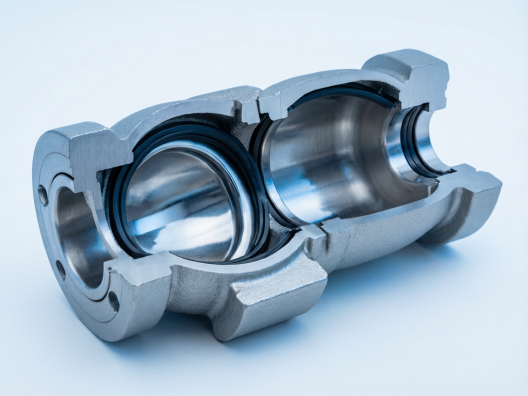
Surface-finish selection should be application-driven: dairy systems typically require Ra ≤ 0.8 µm per 3-A standards; pharmaceutical aseptic process zones generally call for Ra ≤ 0.4 µm (ASME BPE SF-4); and injectable-drug-product systems may specify Ra ≤ 0.25 µm with mandatory electropolish. Over-specifying surface finish inflates manufacturing cost without proportional hygiene benefit — the rational approach is to zone the facility per ASME BPE risk classification and assign finish grades accordingly.
AVM's investment in Mazak multi-axis CNC machining centers and Korean high-precision equipment, combined with dedicated polishing and metrology capabilities, enables stable production of finishes from Ra 0.8 µm through Ra 0.25 µm. Every production lot ships with certified surface-roughness inspection reports, supporting customers' validation documentation requirements. Selecting a manufacturer with proven metrology infrastructure and ISO 9001-certified process controls is the fundamental guarantee of surface-quality consistency.