
 EN
EN
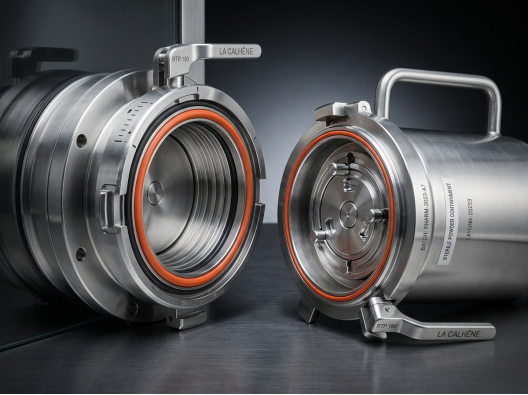
The Occupational Exposure Band (OEB) classification system is the pharmaceutical industry's standardized framework for categorizing the potency — and therefore the handling hazard — of active pharmaceutical ingredients. Ranging from OEB1 (low hazard) to OEB5 (extremely high hazard), the system directly determines the engineering controls, containment equipment, and facility design required for safe manufacturing operations.
The OEB scale correlates to Occupational Exposure Limits (OELs) as follows: OEB1 (OEL > 1000 µg/m³), OEB2 (100–1000 µg/m³), OEB3 (10–100 µg/m³), OEB4 (1–10 µg/m³), and OEB5 (< 1 µg/m³). Common analgesics like paracetamol fall into OEB1–2; oncology agents and hormonal APIs typically classify at OEB4–5, demanding stringent engineering containment throughout the manufacturing chain.
For OEB4/OEB5 compounds, open handling is categorically unacceptable. Instead, manufacturers must deploy high-containment equipment systems — split butterfly valves (SBVs), rapid transfer ports (RTPs), contained charging systems, and isolator technology — to ensure that airborne dust concentrations in the operator breathing zone remain below the compound's OEL during all powder-handling operations.
AVM's split butterfly valve and RTP product lines are rated at OEB4/OEB5 containment performance. This means that under correct installation and standard operating procedures, airborne particulate release during valve docking and separation operations measures below 1 µg/m³ — confirmed through independent testing conducted per ISPE SMEPAC guidelines.
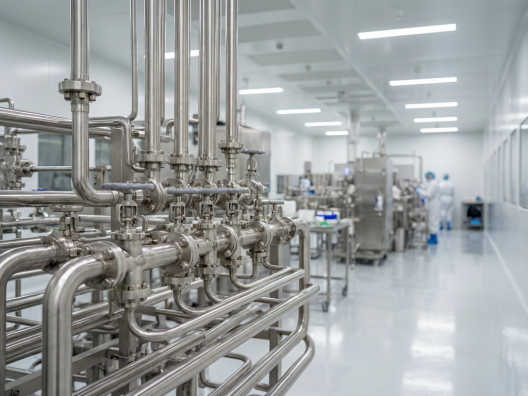
Achieving OEB4/OEB5 performance requires several engineering fundamentals: ultra-precision machining to ensure geometric accuracy of mating faces; multi-barrier seal architectures (typically dual O-ring with leak-detection chamber); elastomer materials balancing wear resistance, elastic recovery, and chemical compatibility; and rigorously controlled assembly processes.
Containment verification follows the SMEPAC protocol: lactose monohydrate (or equivalent surrogate powder) is transferred through the device under controlled conditions while personal air samplers capture airborne particulate in the operator breathing zone. Gravimetric or HPLC analysis then determines the time-weighted-average concentration. Only devices validated through independent or manufacturer laboratory testing can claim a specific OEB rating.
For organizations planning high-potency manufacturing facilities, AVM recommends early engagement between equipment vendor and project team. The company's ISO 9001-certified quality system supports comprehensive technical consultation from containment-level specification through installation qualification, ensuring compliance with evolving FDA and EMA expectations for HAPI manufacturing.