
 EN
EN
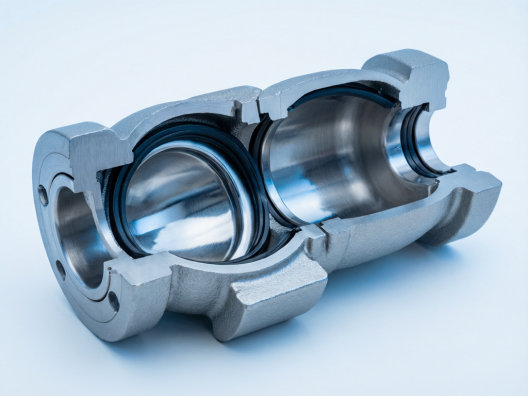
The split butterfly valve (SBV) is a purpose-engineered containment device used throughout the pharmaceutical, fine-chemical, and food industries to achieve dust-tight powder transfer between process vessels. Consisting of an active (plant-side) half and a passive (container-side) half, the SBV enables fully enclosed material movement that eliminates both cross-contamination risk and operator exposure.
In high-potency active pharmaceutical ingredient (HAPI) manufacturing, containment performance is non-negotiable. Per ISPE's Standardized Measurement of Equipment Particulate Airborne Concentration (SMEPAC) guidelines, a well-designed SBV routinely achieves OEB4 (1–10 µg/m³) or even OEB5 (<1 µg/m³) containment, satisfying the occupational exposure limit (OEL) requirements for the most potent compounds on the market.
AVM Extraordinary Intelligent Control (Zhejiang) Co., Ltd. has specialized in hygienic valve manufacturing since its founding in 2016. The company's split butterfly valves are fabricated from 316L stainless steel, feature FDA 21 CFR 177.2660-compliant FKM or silicone elastomer seals, and are finished to Ra < 0.4 µm on all product-contact surfaces — exceeding the baseline requirements of cGMP and ASME BPE.
From a regulatory standpoint, AVM's SBV platform carries multiple international credentials: full compliance with GMP design principles; ATEX certification for use in potentially explosive atmospheres; PED (Pressure Equipment Directive 2014/68/EU) conformity for European market access; and comprehensive material certification with batch-level traceability — a prerequisite for IQ/OQ qualification packages in validated pharmaceutical facilities.

Typical deployment scenarios include API charging into reactors, intermediate transfers between isolators, and final product discharge to filling lines. In each case, the SBV replaces open-handling operations that would otherwise require laminar-flow booths and full personal protective equipment, delivering a two- to three-order-of-magnitude reduction in operator exposure.
When specifying a split butterfly valve, engineers should evaluate: containment class (OEB3/4/5); body material (316L vs. duplex); elastomer grade (FKM, EPDM, or silicone); surface finish standard (Ra ≤ 0.4 µm per ASME BPE SF-4); connection type (Tri-Clamp, DIN flange, or weld-end); and the availability of independent SMEPAC test reports from the manufacturer.
As global regulators tighten expectations around containment — with the FDA and EMA both placing increased scrutiny on HAPI handling during GMP inspections — demand for validated SBV systems continues to accelerate. Partnering with an ISO 9001-certified, 3-A authorized manufacturer like AVM ensures that equipment quality, documentation, and traceability meet the highest international standards.