
 EN
EN
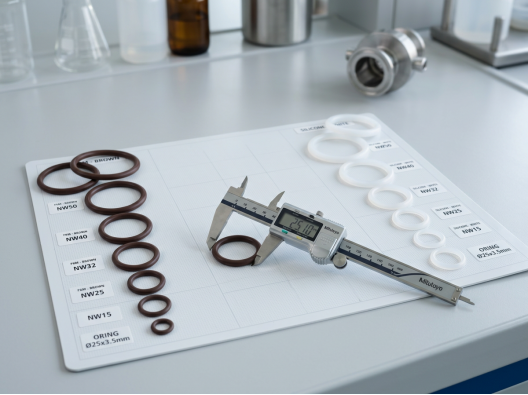
In food processing and pharmaceutical manufacturing, all equipment materials in direct product contact must satisfy rigorous regulatory standards. For the elastomeric seals used in sanitary valves and fittings, FDA 21 CFR 177.2660 is the governing regulation — establishing safety requirements for rubber articles intended for repeated use in food-contact applications.
Title 21 CFR 177.2660 ("Rubber articles intended for repeated use") specifies: compositional limits on rubber compounds; extraction limits under defined test conditions (using water, 8% ethanol, and n-heptane as food simulants); and a positive list of permissible additives and processing aids. Compliance ensures that elastomer seals do not transfer harmful substances to food products during normal service.
AVM uses exclusively FDA 21 CFR 177.2660-compliant elastomeric materials across its entire hygienic product portfolio. For example, the company's split butterfly valves and RTP systems employ fluoroelastomer (FKM) or silicone rubber (VMQ) seals meeting full regulatory requirements — certified through extractables testing and compositional analysis.
Elastomer selection for specific applications requires balancing multiple factors: chemical compatibility (acid/alkali resistance, solvent exposure); temperature range (EPDM: -40 °C to +150 °C; FKM: -20 °C to +200 °C; silicone: -60 °C to +230 °C); mechanical performance (hardness, compression-set resistance, tear strength); and regulatory compliance status (FDA, EU 1935/2004, USP Class VI, or EP 3.1.9 as applicable).
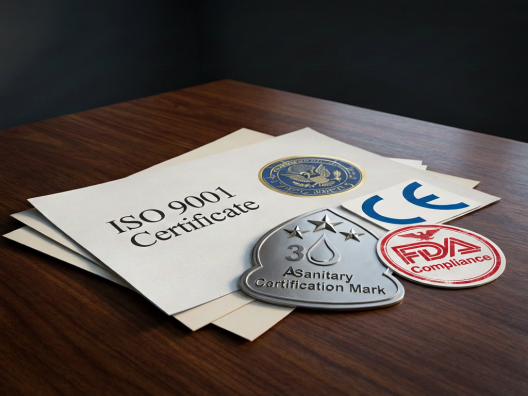
Beyond FDA standards, European market access requires attention to the EU Framework Regulation EC 1935/2004 (food-contact materials and articles) and EC 2023/2006 (good manufacturing practice for food-contact materials). For globally exporting equipment manufacturers, simultaneous compliance with FDA and EU requirements is the baseline expectation for international market access.
Material-compliance verification typically requires suppliers to provide: FDA Declaration of Compliance; material-composition disclosure; extractables/migration test reports per applicable food simulants; and batch-level traceability documentation. In pharmaceutical validation contexts, these documents are essential inputs during Design Qualification (DQ) and Installation Qualification (IQ).
AVM's rigorous supplier-management system and incoming-inspection protocols ensure that every elastomer batch is fully documented and traceable. The company's ISO 9001 quality management system encompasses the complete quality chain from raw-material procurement through finished-product release, providing customers with reliable regulatory-compliance assurance.